He thought he needed new contacts, but Gulfport man would soon lose his sight
AI-generated summary reviewed by our newsroom.
- A CT scan at the ER revealed a brain tumor after his retina specialist saw bleeding.
- Tyler graduated from the EMERGE Center, learning cane use, braille and public transit
- He’s pursuing more training to become an orientation and mobility teacher for the blind.
In 2023, Courtez Tyler noticed his vision was darkening. Maybe, he thought, he was leaving his contacts in too long.
He went to see his eye doctor, who discovered bleeding behind Tyler’s eyes and sent him to a retina specialist. After checking Tyler’s scans, the retina specialist advised his patient to get to an emergency room, where a CT scan revealed a brain tumor. He was then transferred to a Louisiana hospital that had a neurosurgeon.
“It was a shock to me,“ Tyler said. “All my emotions didn’t come then and there. They came later on.”
Only in his late 20s, he thought he might die. But the tumor was a benign neurocytoma. He was at home recovering from surgery when he woke up one morning and walked into the room where his father was watching television. The room was so dark, Tyler thought the blinds were closed. They were not.
Unable to see, Tyler spent a week in the hospital, to no avail. His sight was mostly gone from damage the tumor had caused.
“My mind was scrambling around,” said Tyler, now 31. “Where would I go from there?”
Tyler wondered, would he be able to work? Would he have to accept government assistance?
“I don’t like to sit around,” he said. “ I like to be productive.”
Training, educations opens doors
Up to that point, Tyler had studied and worked toward a solid career. He was hired in 2021 as an electrician at Ingalls Shipbuilding in Pascagoula after earning a degree in instrumentation and controls technology from Mississippi Gulf Coast Community College.
His plan was to gain experience and advance as a maintenance technician. He didn’t mind manual labor. It made the workday go faster, he said. He is a big sports fan who enjoyed watching weekend sports, especially football and basketball. Tyler also likes to cook.
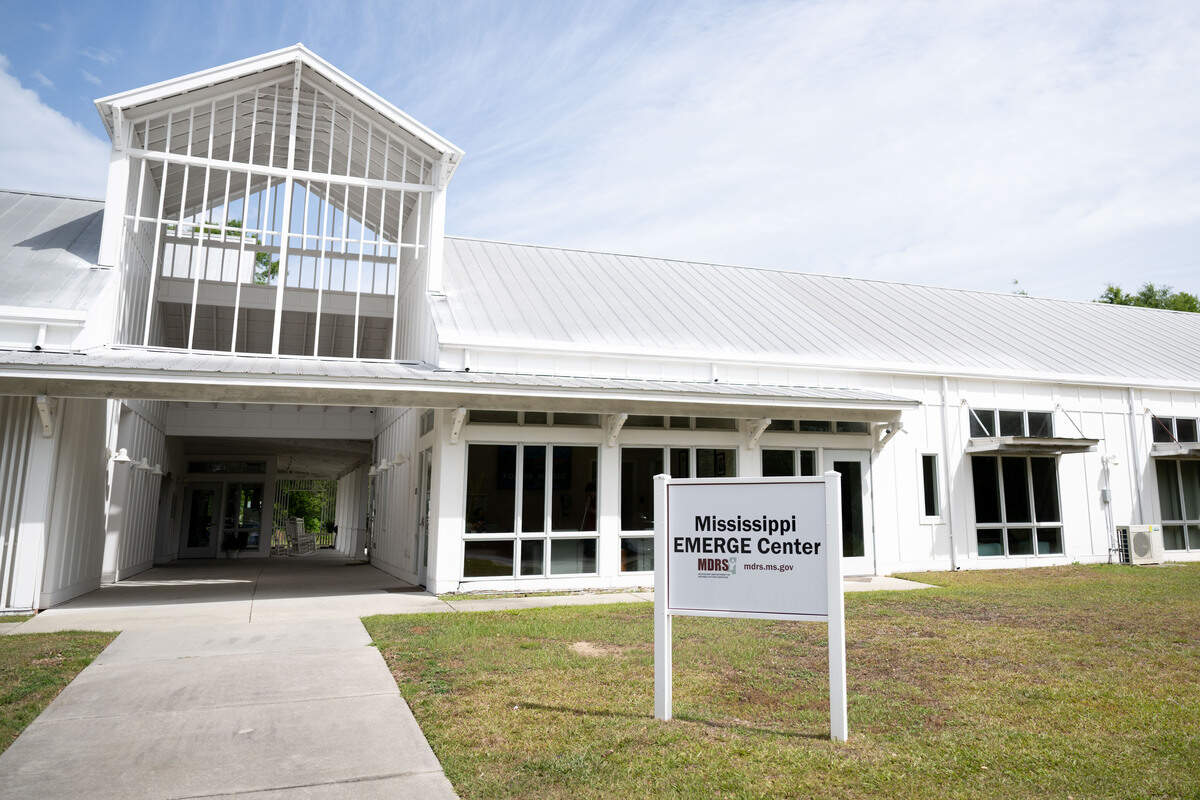
Now, he would have to start over. Looking for resources, he heard about the EMERGE Center in Long Beach, operated by the Mississippi Department of Rehabilitation Services.
He toured the center in late 2024. What excited him was discovering that staff members at the center also were blind. They would understand what he was going through.
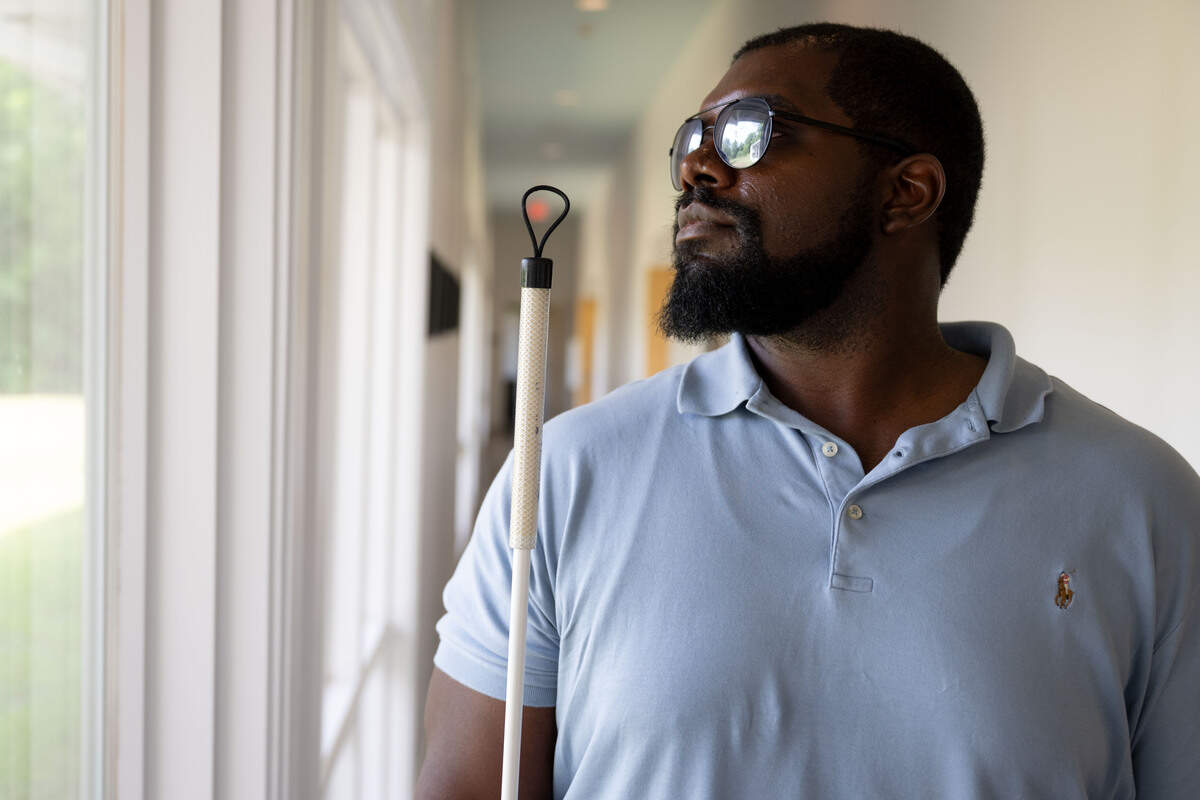
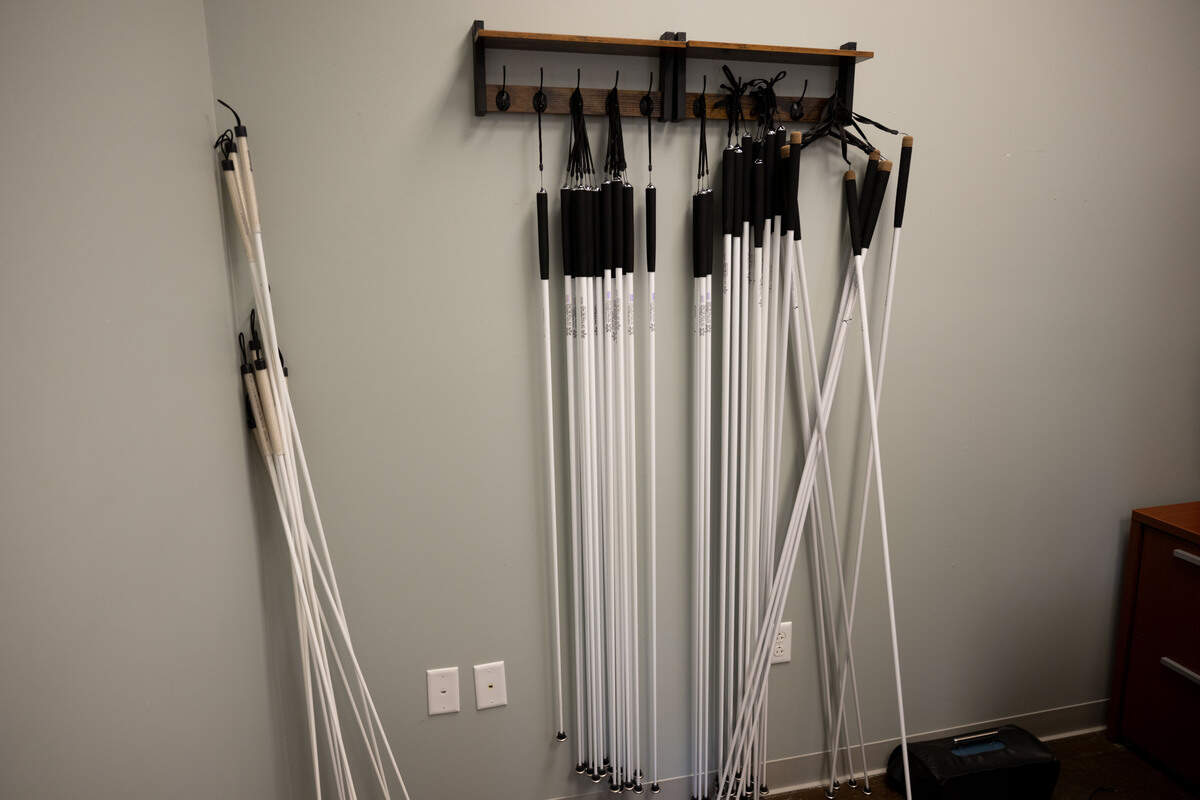
Blindness is a spectrum. Tyler could see shadows and, close up, shapes. At the center, students wear shades to block all light. They use straight canes to get around. First, they learn to properly use the canes, which can be tricky. They take small steps, learning to navigate rooms, then the center building and outdoors.
They orient themselves by tapping the cane as they walk. Concrete and grass feel and sound different, for example. Loud echoes tell Tyler he’s close to a building. No echo? He’s in an open area. His hearing sharpened to the point that friends like to joke he has superpowers.
Graduation leads to next steps
His first year in the program, he went to a convention hosted by the National Federation of the Blind. He said about 3,000 people attended. He met blind lawyers, doctors, masseuses, teachers, chefs. The convention boosted his confidence and helped him understand what he could accomplish.
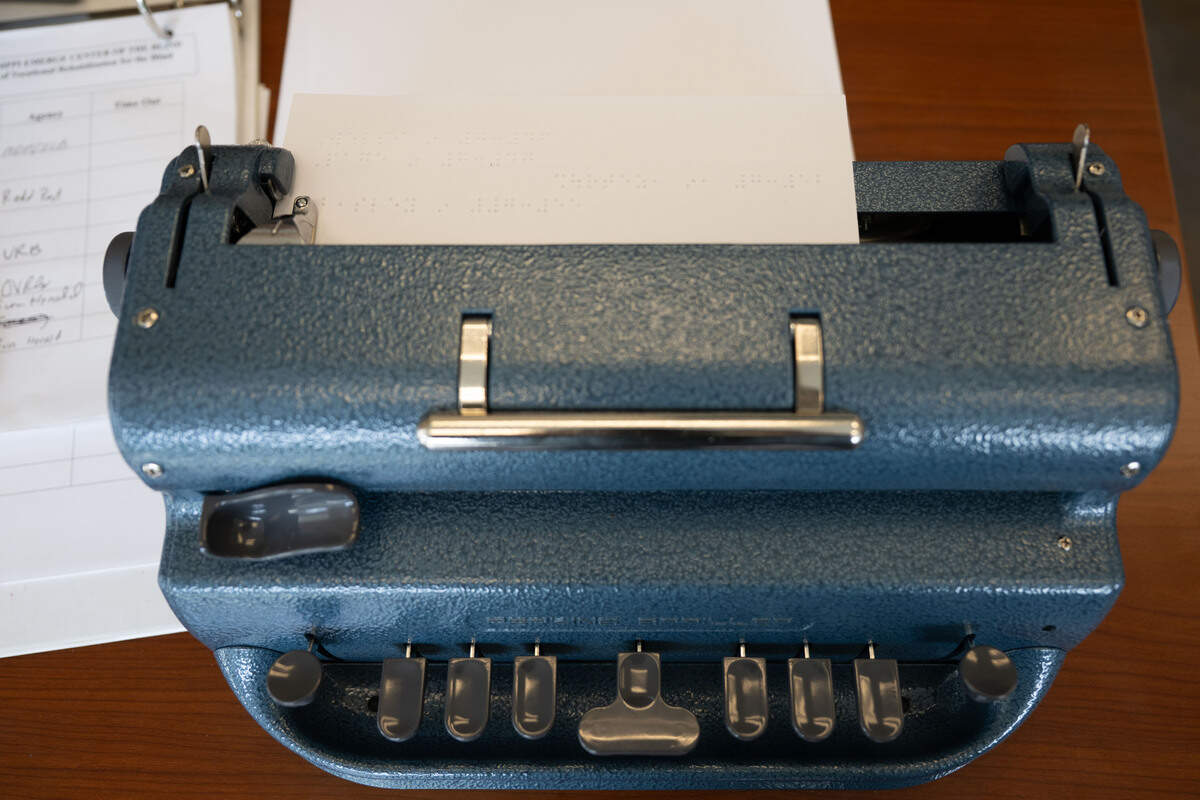
At the center, Tyler also learned braille and how to navigate using public transportation. He graduated in April. One of his final tests was preparing a buffet-style meal for 20. He made jambalaya pasta, green beans, pound cake, muffins and cranberry sunrise drinks.
In mid-May, Tyler will head to the Louisiana Center for the Blind in Ruston, Louisiana, where he will live for three months while he continues rehabilitation and education. Tyler’s new goal is to become an orientation and mobility instructor for the blind. They love him at the EMERGE Center and insist he must return there to work.
When he first lost his sight, Tyler didn’t want to go anywhere or do anything. Today, the 31-year-old looks forward to the possibilities ahead. He wants to help others regain their independence and experience getting back out into the world.
“Life is not over,” he said. “You can still go and do the things you want to do.”
This story was originally published April 29, 2026 at 7:00 AM.