Coast hospital sees baby boom as South MS options for expectant mothers dwindle
AI-generated summary reviewed by our newsroom.
- Memorial Gulfport absorbed many deliveries as several nearby hospitals cut services.
- Births rose 28% from 2023–25; transfers from other cities have decreased.
- Level III NICU in place; maternal-fetal specialists expanded in-house care.
With labor and delivery services no longer available at several Coast hospitals, Memorial Hospital Gulfport is busier than ever delivering babies.
The hospital is equipped to manage premature births and high-risk pregnancies, although infants must still be moved to New Orleans, Mobile or Jackson if they need surgery.
While the Mississippi Coast is not in one of the state’s labor deserts, according to the March of Dimes, options have narrowed for expectant families in Harrison and Hancock counties.
Memorial, in September, shut down labor and delivery services at Memorial Hospital Biloxi because too few OB-GYNs were delivering babies, Memorial CEO Kent Nicaud said. Singing River Gulfport stopped offering the service in 2023, while Keesler Medical Center is currently delivering babies at Memorial Gulfport.
In Hancock County, Ochsner Medical Center stopped delivering babies in 2022, also citing a departure of OB-GYNs as a reason.
From 2023-25, Nicaud said, births increased 28% at Memorial Gulfport. Singing River Health System hospitals in Ocean Springs and Pascagoula also are still delivering babies.
“It’s an expensive service to keep,” Nicaud said. “It’s risky, high-liability.”
Labor and delivery 24/7 in Gulfport
Once Memorial Biloxi ended labor and deliveries, Nicaud said, the service shifted to Gulfport. Biloxi’s mayor wasn’t too happy that babies would no longer be born there, but Nicaud joked that he would annex a few cribs into the city.
In 2020, Memorial averaged 99 deliveries a month. In 2025, the average was 165 a month, with a record 198 in September.
Memorial Gulfport has laborists who are available 24 hours a day for hospital deliveries. The hospital also has an emergency department for pregnant women and operates the only Level III Neonatal Intensive Care Unit south of Hattiesburg. The NICU is staffed with neonatologists, who treat high-risk, premature and critically ill newborns.
Memorial has 23 NICU beds in 12 rooms, where mothers can also stay with their babies.
More recently, Memorial added maternal fetal medicine specialists who manage high-risk pregnancies. Both the laborists and maternal fetal medicine specialists work with Memorial through contracts.
Medical specialists available for moms, babies
Maternal fetal medicine specialists were added in November at Memorial Gulfport. With so many services available in-house, the hospital is seeing fewer transfers to New Orleans, Mobile or Jackson, easing the burden on parents at a time when travel is difficult.
Wayne Laubmeier, manager of NICU, pediatrics and neonatal transport, has been tracking maternal fetal medicine’s impact: By February 5, doctors had completed 39 maternal fetal medicine consults and 22 deliveries at Memorial. The NICU admitted 22 of those infants, with one deceased. The other mothers are awaiting delivery, he said.
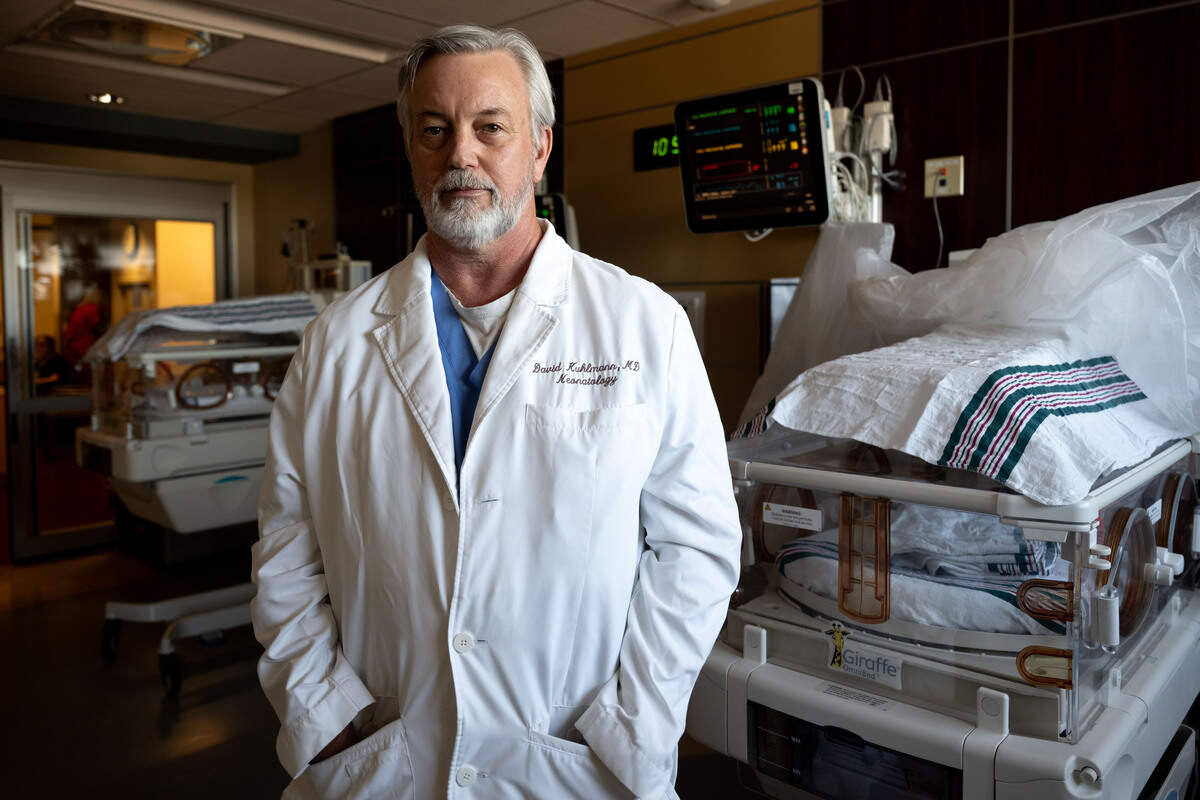
David Kulhmann is one of five neonatologists available to cover the NICU. He works Monday through Monday, then switches shifts with a second neonatologist on the Coast. But the other three help as needed. The unit also is staffed each week with three nurse practitioners.
The NICU is set up with families in mind. Rooms are semi-private, allowing two babies to a room when the NICU is busy. Moms can stay with their infants.
Lights are low and colors are subdued in the NICU.
Memorial’s NICU used to see 45% of admissions as transports from other hospitals, but that number is now down to 5%. Most transports, Laubmeier said, were from the Biloxi hospital, formerly Merit Health Biloxi. Memorial completed the purchase of Merit Biloxi more than a year ago.
Centralizing births has helped
Babies with many conditions, including opioid addictions, are born in NICUs. But they primarily treat premature infants.
Seattle Seahawks linebacker Derick Hall, who was one of Seattle’s many defensive stars at the Super Bowl on Sunday, is a famous 2001 graduate. He weighed 2 pounds, 9 ounces when born four months prematurely and without a heartbeat.
Kuhlmann said 24 weeks was once considered the limit of viability for newborns, but they more commonly survive now at 23 weeks. He said 22 weeks is pushing “the limits of viability,” with a high risk of serious disability or death.
Babies born earlier than 35 weeks are admitted to the NICU because they can have problems with temperature control, feeding, growth and apnea, among other issues. The NICU has a lactation consultant available and a donor program for babies whose moms are not producing milk.
Work stations with computers are set up between two rooms with large windows on each side of the stations so that healthcare workers can monitor the babies. Incubators come with temperature controls.
Centralizing births at one location has been good for babies and their families, Memorial’s NICU staff says. It’s cut down the risk from transfers and allowed families to remain together.
“We’re proud of our unit,” Laubmeier said. “I love getting the word out.”