In 2020, a man living somewhere on the Mississippi Coast contracted severe pneumonia and sepsis.
In May of this year, just ten miles away, another man living in the same county presented the same symptoms.
Both patients were infected by a bacteria so deadly that the Centers for Disease Control and Prevention (CDC) lists it as a potential bioterrorist agent — and as a result became objects of an investigation involving an international team of epidemiologists.
The infectious disease the two Coast men contracted, melioidosis, is endemic in tropical regions of Australia, Southeast Asia and South America. Infections mainly occur through contact with contaminated soil and water, and until last week, melioidosis-causing bacteria had never been found in environmental samples from the continental U.S.
So the incidence of two melioidosis infections in the same county, although two years apart, meant that Julia Petras, an officer in the CDC’s Epidemic Intelligence Service, needed to fly to Mississippi to determine if the bacteria had finally taken root on American soil.
How scientists found deadly bacteria on the MS Coast
The task ahead of her amounted to “shoe-leather detective work,” said Bart Currie, a top expert on melioidosis in northern Australia, who has consulted with the CDC on tracking the disease.
While both patients had faced serious complications from the disease, neither died.
First, Petras needed to find out whether the patients could have imported the disease from abroad. Because melioidosis causes symptoms within 21 days of exposure, she began by exhaustively interviewing both men about how they had spent the three weeks prior to their illness. Neither patient had travel history in this period.
Then she focused her inquiries to elicit potential sites of contamination from the local environment, asking the men “where on their property might they have done some gardening or had done some yard work, where in the county beyond their property did they spend a lot of time doing any recreational activities,” Petras told the Sun Herald.
She then set to collecting over 100 samples, ranging from household products to soil and water at 6 locations across the county, with her efforts concentrated near the patients’ properties.
Currie’s research team in the Australian city of Darwin, which has been studying melioidosis for the last 33 years, has developed the techniques necessary to “find the needle in the haystack, to find the bacteria in soil and water,” Currie said.
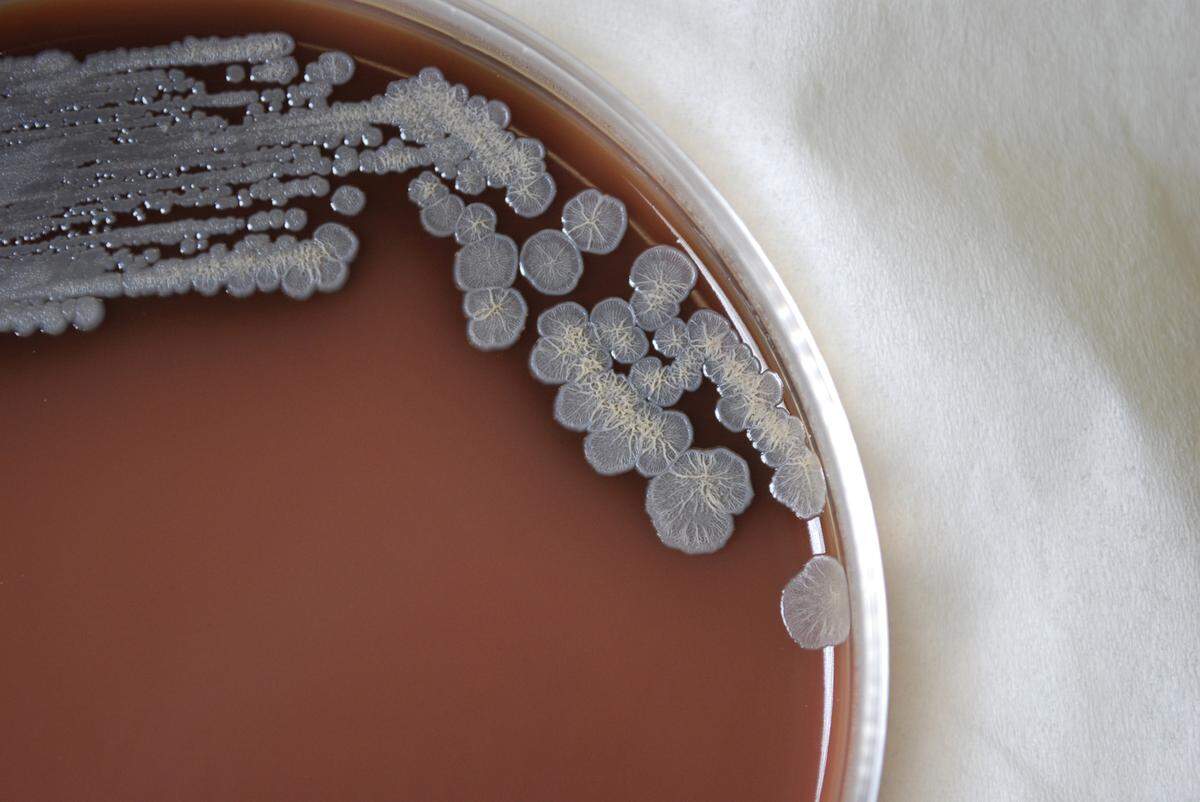
This photograph depicts the Burkholderia pseudomallei bacteria, which is the cause for the infectious disease melioidosis. The bacteria was discovered in soil in the Gulf Coast region in 2022. The Centers for Disease Control and Prevention recommend avoiding contact with soil or muddy water, especially if you have open wounds or suffer from diabetes, chronic kidney disease or chronic lung disease. Dr. Todd Parker Centers for Disease Control and Prevention
Studying bacteria in CDC lab
Using these procedures, the CDC found Burkholderia pseudomallei (or B. pseudomallei), the bacteria that causes melioidosis, in three of the samples Petras collected at the 2020 patient’s property — one from a puddle of water in the front yard, and two from soil samples.
At a CDC lab, the task fell to Jay Gee, a biologist who grew up in northern Mississippi, to study the bacteria Petras had found in his home state.
Gee was instrumental in the identification of a different strand of melioidosis bacteria that infected four patients in 2021, using the same techniques he was about to apply to the Mississippi cases.
In that instance, a new strain of B. pseudomallei that popped up seemingly independently in four states had flummoxed CDC investigators until they found an aromatherapy spray in the house of an infected patient in Georgia and discovered it was contaminated with the bacteria.
The spray had been sold at Walmart and imported from India. Two of the four patients it infected were children.
“That was a real eureka moment,” Gee recalled. “We found the culprit and that was very gratifying to solve that mystery.”
Now, using the samples collected in Mississippi in which bacteria had been found via PCR tests — yes, that’s the same technology used in COVID testing — Gee and his colleagues “took a closer look at them and tried to grow the bacteria directly from those samples,” Gee said.
Gee took DNA from the bacteria and sequenced its genome, and then checked its genetic code against a database of samples collected by researchers around the world.
His study is still ongoing, but so far he’s learned that “this new strain that infected the two patients in Mississippi is unique, did not match anything previously seen,” Gee said.
He confirmed that bacteria found on the property of the 2020 patient were related to the strain that infected both patients.
What is melioidosis, and what does it mean for MS?
The most consequential result of the recent findings is the likelihood that melioidosis is endemic in similar environments across the Coast.
B. pseudomallei thrives in warm freshwater and soil, and modeling had shown it could survive on the Gulf Coast before it was actually spotted here.
With only two cases so far, it’s unclear how prevalent the bacteria actually is. The CDC will now begin collecting more samples across the coastal states.
“Over the next 10 years, it will become clear in which parts of the southern United States the bacteria is present,” Currie predicted.
But in the meantime, health authorities are warning clinicians on the Coast to be on the lookout for melioidosis.
It’s a tricky disease to diagnose because its wide range of symptoms can resemble many other infections, including tuberculosis.
But it’s easier to spot if doctors know that it typically affects “people with risk factors like diabetes or excessive alcohol use, chronic lung disease or immunosuppressive conditions,” Petras told the Sun Herald. The two Mississippi patients had known risk factors.
Infections usually occur through wounds and cuts in the skin by direct contact with contaminated soil or water. The bacteria thrives in freshwater rivers and mud, so you’re unlikely to get infected at the beach.
In some cases, if contaminated soil is sufficiently disturbed by construction or a severe weather event, people can breathe the bacteria directly through the lungs.
Like the Mississippi Coast, sparsely populated northern Australia is increasingly prone to severe weather events — and these bring special risks of infection.
In Darwin, where Currie has studied the disease for the last 33 years, melioidosis is so common that authorities issue “warnings to the public to not go out during severe weather events in areas where we know these bacteria are present. And particularly if you’re a diabetic or someone on cancer therapy, we say stay inside, or if you have to go outside, wear a mask.”
Currie says research into a vaccine against melioidosis is “a very active program at the moment,” in part due to funding by the U.S. Defense Department, which monitors the bacteria as a potential military threat.
B. pseudomallei is closely related to the bacteria that causes glanders, a disease that can be transmitted to humans via animals which was used as a biological weapon by Axis forces in World War I.
“They were infecting horses with glanders and sending horses across into the Allied troops’ areas. And there’s even a story that sugar cubes to feed to horses which were laced with this glanders bacterium were actually sent to the United States,” Currie said.
Because melioidosis thrives in tropical areas, many of which are located in developing countries, “melioidosis is under-recognized and under-diagnosed in many parts of the developing world,” Currie said, especially in countries without the medical resources and labs necessary to identify it.
“The diagnosis has to be made by a quality laboratory which can do the bacterial processing, culture it, and then identify it,” Currie said.
In June, Currie co-authored an article in the medical journal The Lancet arguing it should be listed as a “neglected tropical disease.”
“It’s a sentinel disease in highlighting global disparities in access to health care, and access to diagnostics, access to treatments,” Currie said.
Among the reasons for this is the specific treatment regimen the disease demands.
“Melioidosis needs to be treated aggressively with intravenous antibiotics, which are not commonly used antibiotics, and it needs to be treated for a long period of time. It’s not like just five days of antibiotics, like your normal course,” Currie said.
“You need to have anywhere between two and eight weeks of intravenous antibiotics, followed by a three month to six month course of oral antibiotics to make sure it doesn’t come back again.”
As a result, the disease has a wide range of mortality figures associated with it depending on the resources of the country it’s present in.
“If it’s diagnosed quickly and people are given the right antibiotics, the mortality will be 10% or a bit less,” Currie said.
But in “parts of the world where it can’t be diagnosed, and some people can’t afford or don’t have access to the antibiotics, the mortality is 50% or higher,” Currie said.
It remains to be seen how the newly detected disease will fare in Mississippi’s cash-strapped health system. Currie, from his vantage across the globe, sees reasons for concern as well as hope.
“Socioeconomic disadvantage is an independent risk factor for melioidosis, so that may be very relevant in the southern United States,” said Currie. “But I would say at the same time, your two cases in 2020 and 2022 were diagnosed and were very well treated, and both survived. That’s a very positive thing.”
This story was originally published August 2, 2022 at 1:14 PM.