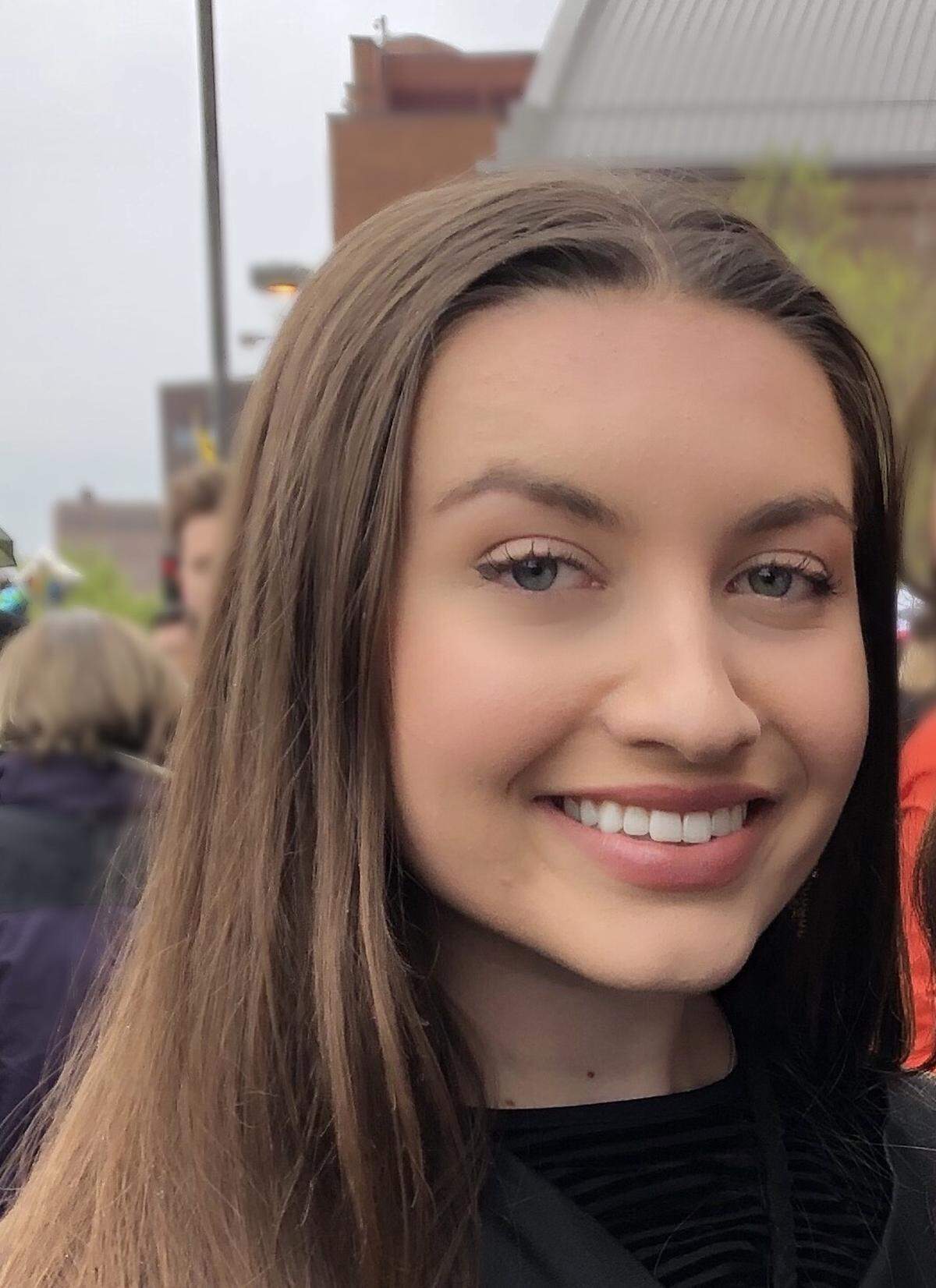
Coast mom nearly died while giving birth. She still feels ‘helpless’ from effects of COVID.
In October, Taylor Manning was walking around the D’Iberville Lowe’s Home Improvement store with her oxygen tank and newborn baby, Maevi, when she was stopped by a stranger.
“A woman from Washington stopped me in Lowe’s and goes, ‘You don’t know me, but I know who you are. We’ve kept up with your story. And my whole church is praying for you.’”
The story of the Ocean Springs woman’s near-death experience with coronavirus during the fourth wave which triggered an emergency C-section and lengthy separation from her newborn had circulated after her hospital release in late September.
Manning, 31, fought the virus for 7 weeks in the hospital, spending over a month on a ventilator when the delta variant devastated the Mississippi Gulf Coast near the end of summer. She had been intubated before the birth of her daughter and was moved, while sedated, to the ICU immediately.
Maevi was born premature but COVID-negative. Manning didn’t get to meet her baby until Sept. 8, during a surprise visit.
It’s been more than two months since Manning was released from the hospital. The long-haul symptoms from COVID are real and difficult to grapple with, she said.
“It’s just hard accepting all the different changes and being a COVID long hauler,” she said in an interview with the Sun Herald, stopping every so often to catch her breath.
“COVID long-haul symptoms are 100% a real thing. And part of me feels like I’m never going to recover. And that’s frustrating. And then another part of me has to keep up for my family. When I’m down on myself, I can’t let my family see that.”
Hair loss, breathing problems, insomnia and general Post Traumatic Stress Disorder are some of the physical symptoms of COVID that have lingered for Manning, along with the financial and mental health anxieties that have arisen from not being able to work during her recovery.
“The hardest part is the PTSD, the hair loss. And I just feel helpless. Then the fact like, I don’t feel like I’m contributing to our family,” she said.
Manning, who hadn’t been vaccinated when she got COVID because of early pandemic guidance that pregnant women should avoid shots, is still not vaccinated per her doctor’s recommendations. She said in January she plans to get her antibodies tested again and make a vaccination decision.
Vaccines are “remarkably successful” at preventing COVID-19 in pregnant women, health officials say, despite some hesitancy. The Centers for Disease Control and Prevention, the Society for Maternal-Fetal Medicine and the American College of OGBYNs strongly support vaccination for pregnant women.
Physical recovery
Experts from Johns Hopkins describe long COVID as lasting health problems from the virus, even when patients have recovered from the acute phase of the illness.
According to the CDC, the most common lingering symptoms are fatigue, shortness of breath, cough, joint pain and chest pain. Other issues include cognitive problems, difficulty concentrating, depression, muscle pain, headache, rapid heartbeat and intermittent fever.
Manning said she’s mostly experienced fatigue, shortness of breath, rapid heartbeat and mental health problems. When she got out of the hospital, she was in physical therapy and occupational therapy up to three times per week. Now she’s walking on her own, but her mobility is still challenged without all her physical strength restored.
She still has what she calls COVID tongue, or loss of taste which she describes as feeling like a mouth burnt by coffee, along with “insane insomnia.” A month ago, she started losing her hair.
“And it’s really depressing. I’ve lost almost all of it. I mean, you can see straight through my hair to my scalp,” she said.
“My husband and I went out, we bought some wigs. And it’s just, it’s a hard change just in that aspect. I mean, I’m literally almost completely bald.”
The hair loss, along with the scars she still has on her face from months hooked up to ventilator tubes has really impacted her confidence level, she said.
“My self-esteem is awful right now.”
Megan Hosey, a rehabilitation psychologist, says that prolonged time in the ICU can also leave patients with lasting and recurrent sensations of terror or dread, including PTSD.
“Now I have COVID PTSD, where I wake up thinking by my vents being pulled out, or I’m back on a ventilator, or I get scared that my breathing will stop in the middle of night,” Manning said.
“I have to say on heart medication and anxiety meds. Because without it, my heart rate skyrockets still.”
She sees a therapist every two weeks via telehealth because she gets anxiety driving now, in fear that she’ll stop breathing on the road. Manning also said she gets random tingling sensations in her fingers and arms and sometimes it feels like her scalp is “on fire.”
Emotional, financial healing
Manning is also dealing with the guilt of surviving COVID while so many did not during the deadly fourth wave across the Gulf Coast. She became emotional when talking about her brother-in-law, who passed away after fighting COVID around the same time she did.
“He was a single father of an almost 7-year-old,” she said.
“It was very hard to accept the fact like my nephew is now you know, without parents completely. Why did God choose me to live? When my kids have another parent, you know? When we went to the wake and the funeral. I was just so overwhelmed with that should be me laying in that coffin.”
A lot of her feelings of unworthiness right now are also tied to her inability to contribute financially to their family. Manning, an office systems administrator with Halter Marine, hasn’t worked or been paid since mid-July. She hopes to get approval from a respiratory team to go back to work in early January.
Manning said all of her nearly $2.8 million medical bills have been covered by Veteran’s Affairs, because she was formerly in the Army.
“We’re living penny to penny right now,” Manning said. “Yes, I love getting to know Maevi since I missed out on the first 8 weeks of her life, I want to be back in society and I want to be making a difference and contributing.”
Future for MS Coast family
Maevi is a healthy 4-month-old baby.
“She’s perfect,” Manning said. “She’s grown out of the premature stage. She eats constantly, she’s just skinny.”
Moving forward, Manning hopes to add more of her old life back slowly. On top of starting her job again in January, she will begin classes to finish her bachelor’s degree in clinical psychology from Louisiana State University again near the end of January.
A junior, the mother of three takes classes remotely with an expected graduation in Dec. 2022. Manning also hopes to get back to her job as an all-star cheerleading coach near the end of spring.
“I’m a go, go, go person normally and now I feel disappointed in myself that I need to rest daily or that I feel lazy because I can’t stand on my feet for long periods. I feel like I’m missing so much,” she said.
This article and live event is supported by the Journalism and Public Information Fund, a fund of the Gulf Coast Community Foundation.