Local tourism, business boom during MS Gulf Coast’s fourth Covid wave was ‘striking’
Business exploded on the Mississippi Gulf Coast this summer at the same time COVID-19’s Delta surge ravaged the area, causing record deaths and hospitalizations, state and local economic data show.
While Southern Mississippi made national headlines during the summer as one of the first places experiencing the deadly, rapidly transmissible Delta spread, the Mississippi Gulf Coast’s renowned hospitality industry quietly grew.
At one point during the summer, State Medical Officer Dr. Thomas Dobbs said June’s low rates of COVID-19 cases and deaths seemed like “a vacation” compared to what followed.
COVID left 2,511 people dead and brought 173,034 new cases in the state in the three harshest months of the Delta wave across Mississippi, from July 19 until Oct. 19. In South Mississippi alone, 188 died and 3,8184 new cases were documented during the same time.
Yet, tourists still arrived in South Mississippi, locals went shopping and dined out and business surged. Casino revenues swelled to record levels, while in other areas of the country casinos and businesses were closed or had stricter regulations to prevent the spread of COVID.
“As we started looking during the summer months at the recovery that was occurring in competitor regions — really across the southeast and even around the country — in many cases, we were finding that the economic recovery occurring in coastal Mississippi was greater than any of these other regions,” said Ashley Edwards, CEO of Gulf Coast Business Council.
“We found ourselves in first place among many of our competitors. And that’s not a position we find ourselves in often,” Edwards said.
It was “striking,” he said, how well the Coast was doing going into the Delta surge. Coast business leaders expected a very strong recovery, he said, and what they saw was even greater than expected in part due to little state regulation, lax local attitudes about the pandemic and a convenient, drivable geographic location.
Three months of Delta surge
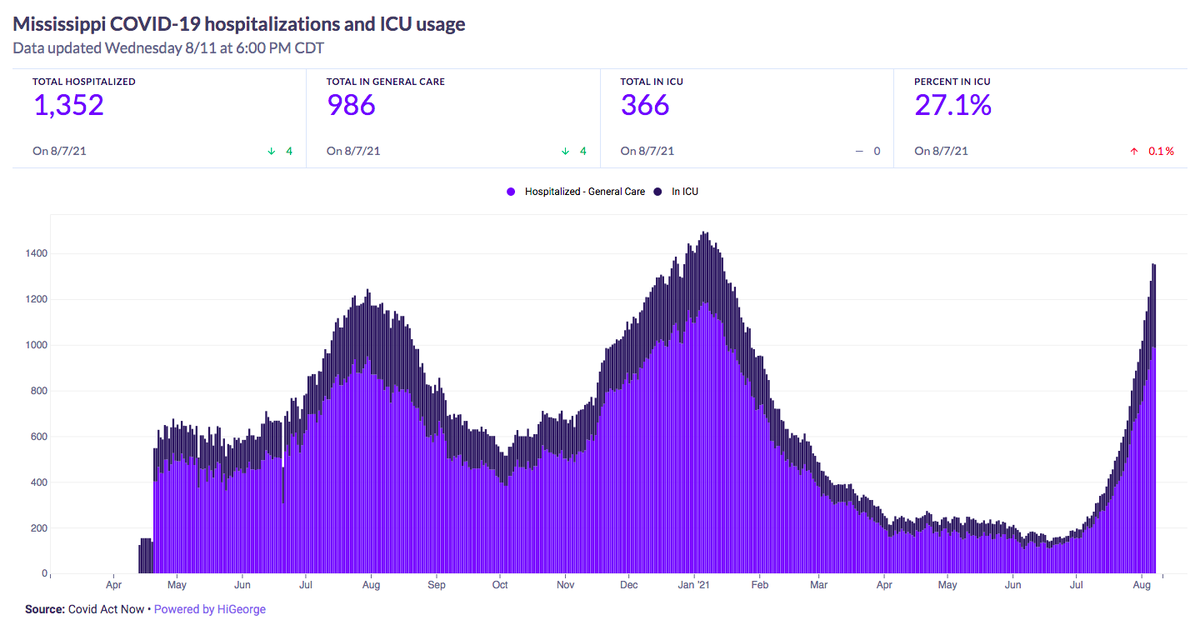
Dobbs sounded the alarm on July 14 for what would become an explosive public health crisis in the state, tweeting that COVID’s “4th wave is here.”
As new case counts unfurled to an average of 1,417 positives and seven deaths a day until the end of July, hospitals became overburdened and the community became desperate for treatment.
Local, statewide and national pleas for assistance across Mississippi echoed as the the state of just over 2.9 million reached COVID numbers comparable to cities or states four times its population during the pandemic’s peak in January.
Cases spiked to an all-time high during August and September, the back end of the Coast’s largest tourist season, making the Mississippi a global COVID-19 hotspot and first in national mortality numbers.
Overflow intensive care units for the state’s trauma and pediatric patients sat in white tarp tents on the floor of a Jackson garage during this time. A total of 20,000 children were quarantined after the first week of classes in August — the month that saw the highest positive COVID-19 case counts in Mississippi, totaling 83,217. The Mississippi State Department of Health health reported an average of 4,237 positives and 39 deaths a day.
September was the deadliest month of the entire pandemic, with 1,192 deaths in Mississippi and an average 2,348 new positives and 54 deaths a day.
By October, the number of cases was falling steadily, with 15,924 positive cases and averaging about 758 cases and 22 deaths a day.
‘Perfect storm’ of Delta and vacation
Gov. Tate Reeves lifted a mask mandate in March and didn’t reinstate it during the Delta surge. Vaccination mandates were not instated and remain a point of contention with the federal government. Mask wearing and vaccination rates remained low across the state, especially in South Mississippi.
Mississippi’s few COVID regulations compared to other states — where businesses remained closed and restaurants were limited to outdoor dining or proof of vaccination was required to enter crowded spaces — in part led to economic growth and stability in Mississippi, Edwards said.
In late October, while new case numbers were making their way down, the Republican governor in an interview with Fox News personality Laura Ingraham said he “refused to let fear and pressure dominate our COVID response,” which resulted in a “roaring economy.”
“We’re seeing people around the country looking at Mississippi and other red states because we’ve been open for business. We have a business-friendly environment, we have a great place to come visit,” Reeves said.
Edwards said the state’s limited restrictions while the Delta variant escalated during peak tourism season across the MS Gulf Coast became an economic success but a tragic loss of life.
“We saw a greater spike in Delta numbers in coastal Mississippi, because of the time that Delta hit — right in the midst of the big, busiest summer tourism season,” Edwards said.
“It was a bit of a perfect storm of sorts. ... But that’s also sort of why we continue to do so well,” he said. “It was sort of a win-one,lose-one there, lots of sickness coming in, but also lots of visitors and lots of consumers here spending money.”
Edwards said geography certainly contributed to the booming economy during the Delta surge as well.
South Mississippi is primarily a drop-in market, he said, in the deep South, where people generally were more comfortable about getting out. That was especially true after people started getting the vaccine, he said, and during the summer when people who typically fly to destinations preferred to drive.
“So as a result of that, we just saw more economic activity, we saw more hotel rooms filling up,” he said.
Shopping rates surged
Sales boomed, and Coast cities saw their share of sales tax revenue from the state jump $9.2 million this year. Almost half of that increase was in Gulfport, although all 12 cities saw an increase over 2020 levels.
“I think it was a pent-up effect,” said Pam Meinzinger, general manager at Prime Outlets in Gulfport. “They wanted to get out, shop,” she said.
They had extra income from two rounds of //stimulus (checks). Most people received and thousands of dollars more each month in Child Tax Credits, “and they were looking for great bargains,” she said.
Tourism boomed
Coastal Mississippi scored a $2 million grant from the CARES Act, matched by $500,000 in local money, to create a marketing campaign and draw tourists back to the Coast.
The agency that promotes the three Coast counties spent the money getting the word out in regional markets that are an easy drive to the Coast that South Mississippi was a safe place to visit.
A Coastal Mississippi Promise of health and safety was promoted to make potential visitors aware that owners of Coast hotels and restaurants were taking steps to protect them from the coronavirus.
Hotel occupancy swelled. Reports from July through September show Coastal Mississippi, which benefits from a room tax, saw a nearly 61% increase in payments over 2020.
From January through September, Coastal Mississippi saw an 81% increase in hotel revenue compared with last year.
Casinos have a record year
Any questions about whether people were ready to return to the Coast casinos during the pandemic are shattered by record casino revenue.
Gross casino revenue — the amount won by casinos after paying wins but before expenses — hit $1.2 billion in September, already surpassing all of 2020.
The previous record year was 2019, the year before COVID-19, when Coast casinos won $1.31 billion. For 2021, revenue through September is $222 million ahead of 2019 levels.
With the Atlantic City casinos closed, people from the Carolinas, Virginia and Tennessee, who travel to both Atlantic City and the Mississippi Gulf Coast, traveled south to the Coast this year, said Jonathan Jones, general manager of Harrah’s Gulf Coast in Biloxi.
Now that the New Jersey casinos have reopened, people are still coming to South Mississippi, he said.
“And I fundamentally believe that people came to our properties and realize what a great destination this is. What a beautiful location it is, how genuine the hospitality and the service levels are. And they’re guests for good now and they’ve chosen to come here and they’re going to continue to come back.”
Casinos develop own requirements
Jones said the casino operators and the Gaming Commission talked often throughout the pandemic.
“We were fortunate that the legislature and the governor basically trusted the regulators, to let us open in a responsible way, protecting the health and safety of our co workers and our guests,” he said. “And the regulators really trusted us to come up with the right rules and regulations.”
In some cases those regulations were more stringent than the state’s requirements, Jones said, and in his case, the Caesars health and safety plan in many ways overlapped the Gaming Commission requirements.
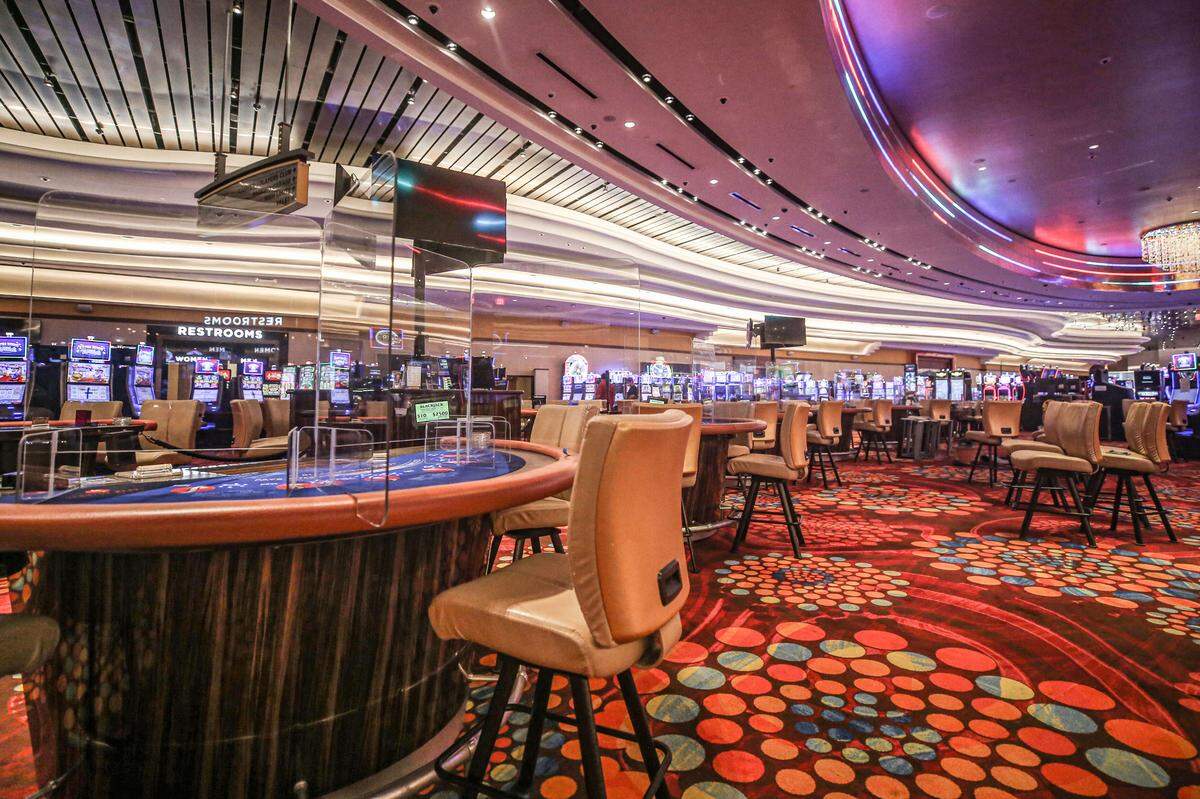
The Coast casinos were requiring masks before the state required them. Hand sanitizer dispensers were placed throughout the resorts, plexiglas installed between the slot machines and table games, and buffets, spas and some other high-contact amenities remained closed.
Scarlet Pearl Casino in D’Iberville was the first casino in the country to require all employees to get vaccinated.
Other casinos did not implement a vaccine mandate, but Jones said they did provide incentives for staff to get immunized and Beau Rivage Resort and Casino changed its billboards on Interstate 10 from promoting amenities to encouraging people to “do the right thing” and get the vaccine.
This story was originally published November 9, 2021 at 5:00 AM.