Do people with asthma face higher COVID risks? Medication may play a role, study finds
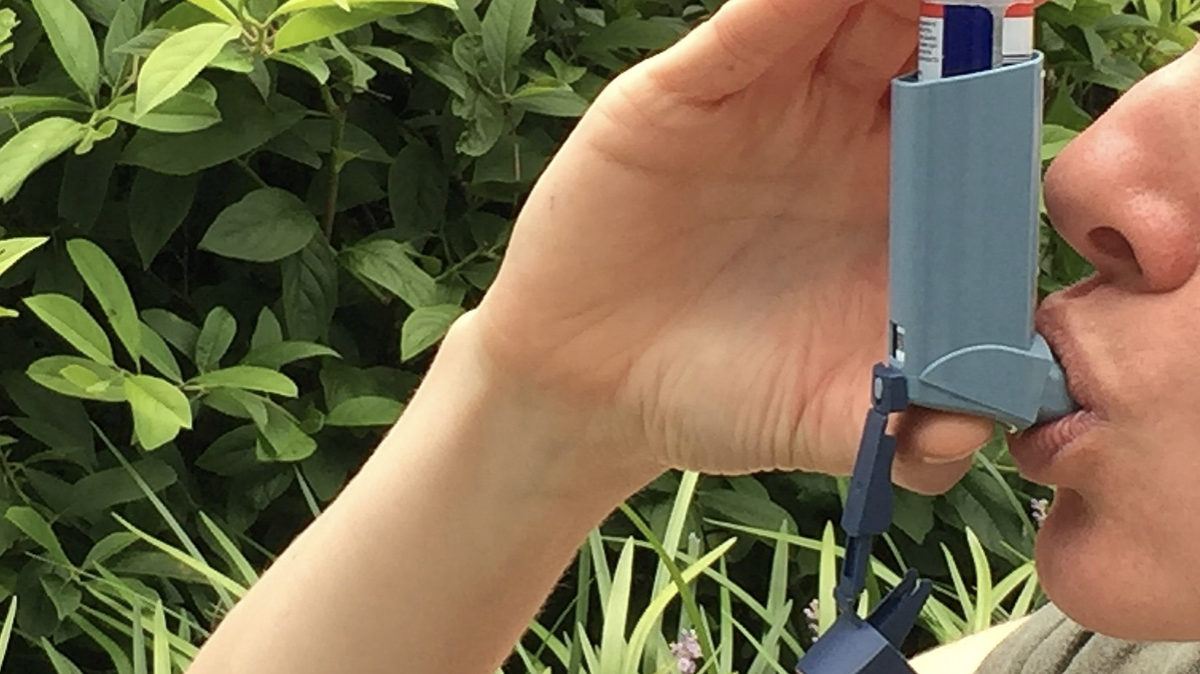
People who take medications to control their asthma may be more protected from serious COVID-19 consequences than those who don’t, according to a new study, but it depends on how severe their condition is.
Data on more than 61,000 coronavirus patients show that those with “active” asthma — meaning they visited a doctor within the last 12 months for their condition — who were taking medications to treat it benefited from a more than 25% lower risk of severe COVID-19, including hospitalization, “intensive respiratory support,” (IRS) and intensive care unit admission, compared to those not taking medications.
The University of Southern California study also found that, generally, people with “active” asthma had higher odds of hospitalization, IRS and ICU admissions — but not death — than those without the condition. Similar results were found among patients with chronic obstructive pulmonary disease (COPD), except risks of death were higher in this group.
However, COVID-19 patients with “inactive” asthma, or those who don’t require clinical care, were not faced with higher coronavirus risks, suggesting people with mild asthma cases don’t have to worry too much, according to the paper published Tuesday in The Journal of Allergy and Clinical Immunology: In Practice.
The findings suggest people who require medical attention for their asthma should continue to take their medications as the pandemic rages on, and as more dangerous coronavirus variants spread across the nation.
Data was collected from Kaiser Permanente Southern California electronic medical records from March to August 2020, before vaccines were available in the U.S.
“Anyone with asthma should continue to work with their health care provider to ensure they are getting the best treatment for their asthma, which leads to better asthma control and decreases the likelihood of severe COVID-19 outcomes,” study co-lead author Zhanghua Chen, an assistant professor of population and public health sciences at USC, said in a statement.
Why might asthma medications protect against severe COVID-19?
Researchers speculate that asthma medications, some of which work by reducing inflammation in airways, may be protecting against COVID-19, also known to cause harmful inflammation throughout the body.
The theory has been difficult to study, experts say, but it may explain why many studies fail to find a strong association between asthma and higher risks of severe COVID-19.
“People with asthma — even those with diminished lung function who are being treated to manage asthmatic inflammation — seem to be no worse affected by [the coronavirus] than a non-asthmatic person,” Dr. Reynold Panettieri Jr., a pulmonary critical care physician and director of the Rutgers Institute for Translational Medicine and Science in New Jersey, said in a statement. “There is limited data as to why this is the case — if it is physiological or a result of the treatment to manage the inflammation.”
One idea is that inhaled corticosteroids — a common medicine used to prevent asthma attacks — may hinder the virus’s ability to cause infection, Rutgers researchers say. But some studies have found that steroids may instead worsen inflammatory responses caused by the coronavirus.
Many studies find no tie between asthma and severe COVID-19
The Centers for Disease Control and Prevention says people with moderate to severe asthma are more likely to be hospitalized from COVID-19.
But that’s not what many studies on the topic are finding.
“Asthma has not risen as one of the top comorbid diseases for worse COVID-19 outcomes,” Dr. Sandhya Khurana, director of the Mary Parkes Center for Asthma, Allergy and Pulmonary Care at the University of Rochester Medical Center in New York, told WebMD . “We always worry with asthma and viral infections, because they seem to trigger asthma exacerbation unreasonably. But what we’ve seen so far is reassuring.”
A study of more than 300,000 COVID-19 patients from Asia, Europe and North and South America found that just over seven in every 100 people had asthma, compared to just over eight in 100 in the general population. It also found that people with asthma had a 14% lower risk of developing COVID-19 and were “significantly” less likely to be hospitalized.
It could be that certain chemical receptors in the lungs that the coronavirus attaches to are “less active” in people with asthma, the researchers said. Or, “initial uncertainty about the impact of asthma on COVID-19 may have caused anxiety among patients and caregivers leading them to be more vigilant about preventing infection.”
A separate paper found asthma was not associated with worse COVID-19 severity or outcomes, including the need for mechanical ventilation; it also revealed people with asthma had a lower risk of death than people without asthma.
The type of asthma someone has may determine how their infection manifests, too.
Harvard University research shows people whose asthma is triggered by allergens do not face increased COVID-19 risks. But those with non-allergic asthma had up to 48% higher odds of severe disease.
Khurana of the University of Rochester told WebMD that people with allergic asthma have fewer of the chemical receptors the coronavirus binds to, meaning they are less vulnerable to severe infection.
“Patients in conditions like diabetes or hypertension, this receptor expression is increased,” Khurana told the outlet. “That’s a possible reason why those comorbid diseases are at especially high risk for this infection.”
This story was originally published August 10, 2021 at 3:06 PM with the headline "Do people with asthma face higher COVID risks? Medication may play a role, study finds."