Coast couple went to Texas for Thanksgiving. COVID took her ‘knight in shining armor’
Vicki and Terry Fairley left Gulfport for Houston before Thanksgiving to spend the holiday with their kids. Almost three months later, Vicki came home without Terry.
She had lost her husband to COVID-19, and was still struggling to recover from the same disease after more than a month in a Houston hospital.
The couple got sick in mid-January, as cases, hospitalizations and deaths were surging around the country, and especially in Texas, where 22,000 people were testing positive everyday. Masks had been required in public in Texas since July, and in most counties in Mississippi since August.
But not long after Vicki made it home, it seemed to her that Mississippi and Texas, or at least their leadership, were eager to declare the pandemic already over. Watching the news on March 2, when both states’ governors announced the mandates were ending, Vicki couldn’t believe what she was hearing.
Vicki is still dealing with the physical effects of COVID-19. She lost 25 pounds and still feels weak.
And she is adjusting to life without her husband of almost 38 years and partner of 44, and without the rhythm of their shared routines: lunch when he came home from working at the docks, date night on Saturdays, church at Mt. Pleasant United Methodist on Sunday mornings.
“Being together — I’m gonna really miss that,” Fairley said. “Well, I am missing it.”
Because she was fighting COVID-19 in another hospital when Terry died, and still there during his funeral, she said she feels like she missed the period of his passing.
“Sometimes I feel like, am I in a nightmare?” she said. “Am I just dreaming? Is my husband really gone? And I know that there are different stages of grief. So right now — sometimes I feel like I’m numb, and it’s like, did this really happen? Is this really happening? And then sometimes I feel like I just can’t hold it together.”
‘My knight in shining armor’
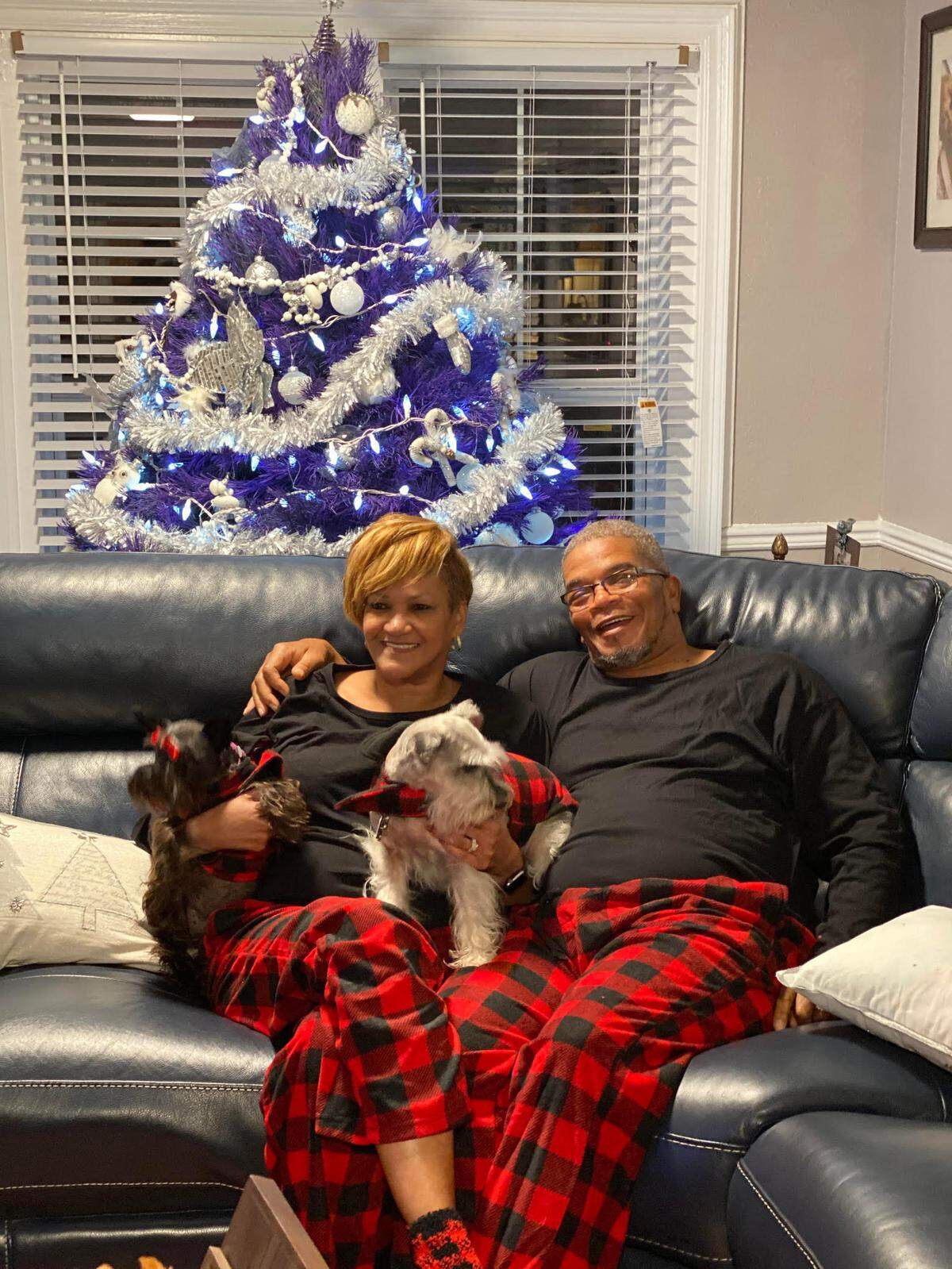
Vicki and Terry grew up living near each other in Gulfport’s Turkey Creek community. Terry was four years older. One night, a group of friends went out to a place where teenagers gathered to dance. There was a man who wouldn’t stop badgering Vicki to dance with him. Terry got him to stop.
“He kind of walked up and told the guy to leave me alone,” Vicki remembered. “I kind of felt like he was my knight in shining armor.”
They started dating, and have been together ever since.
“He’s my high school sweetheart,” she said. “My first — my only boyfriend.”
Terry was a longshoreman and Vicki ran a hair styling business out of their home until she retired in 2013. When he came home for lunch everyday, Terry would peek his head into the salon to say hello. Her clients called them “the ideal couple.”
He was a gentle person, “a family man,” and not hard to please, Vicki said. He loved his children and his four grandchildren (a fifth is on the way).
“He just loved being home,” she said. “You give him his TV and his remote, and he was happy.”
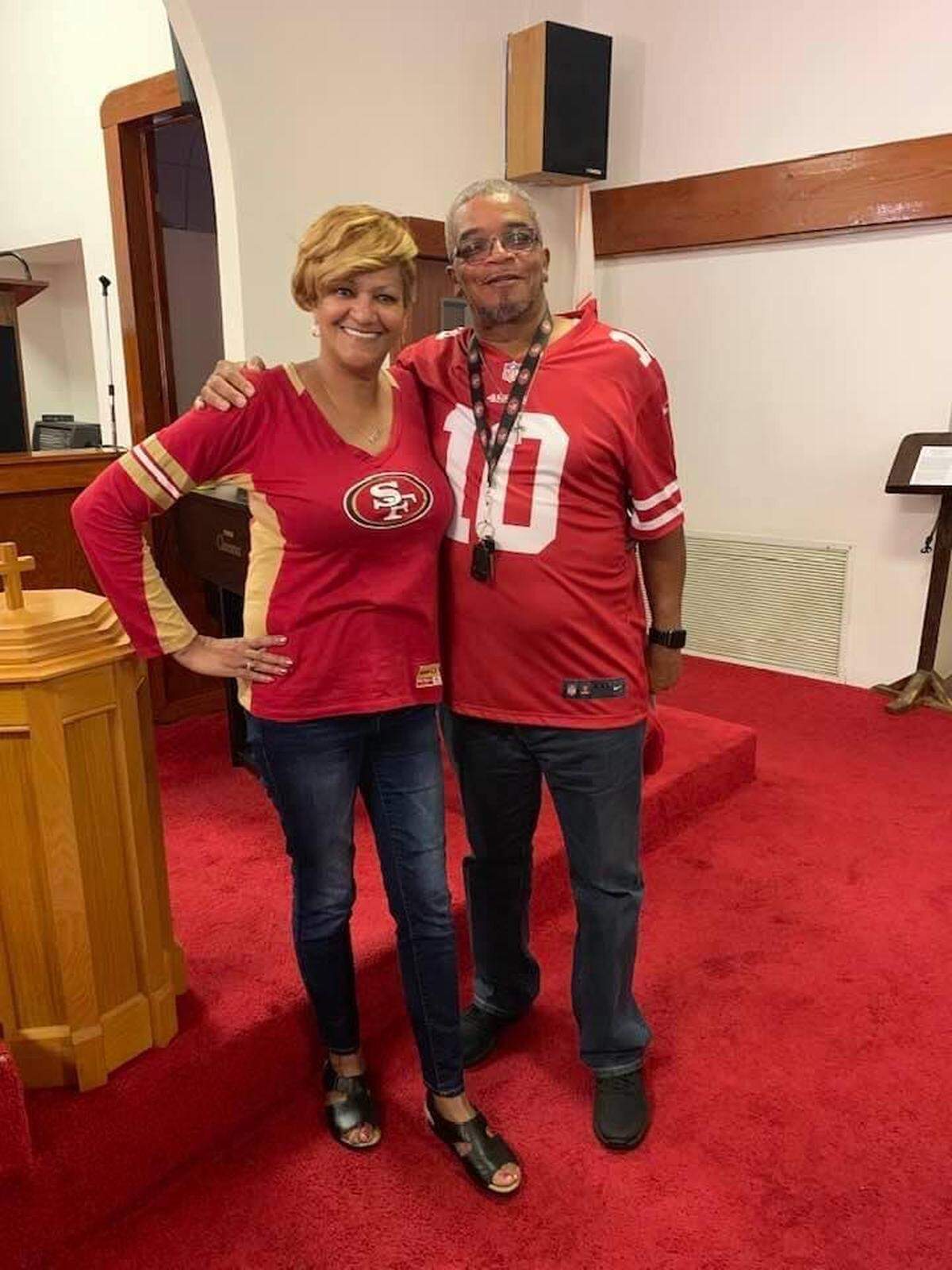
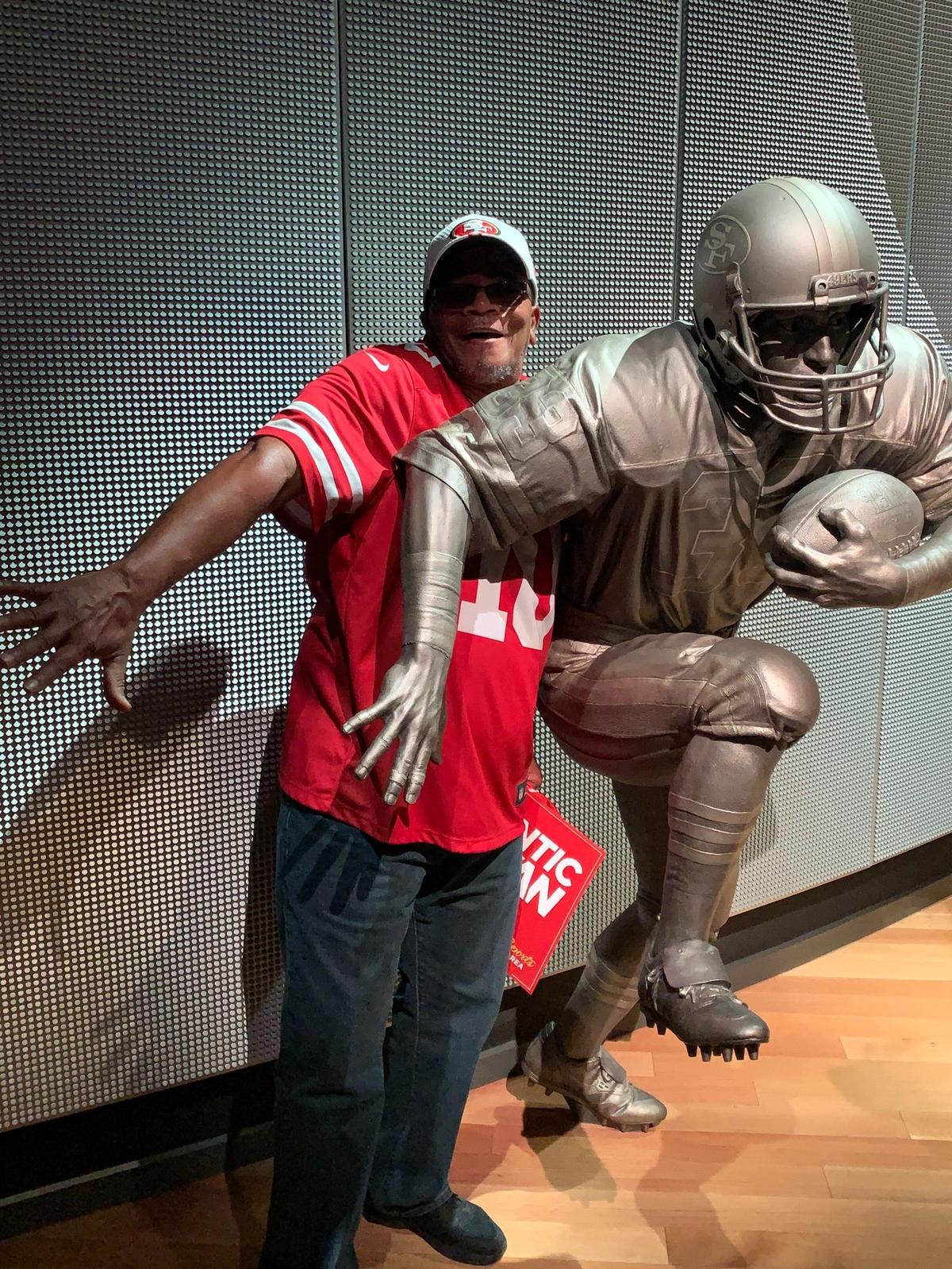
For reasons she doesn’t quite know, Terry always loved the San Francisco 49ers. He’d joke around with his colleagues at the docks, almost all of whom were Saints fans, and proudly wear a 49ers jersey to church, where the congregation of Saints fans would boo when they walked in.
When the pandemic hit a year ago, Vicki stocked up on cleaning supplies, Vitamin C and zinc, and masks for Terry to wear to work. She remembers he was an early adopter among the other men he worked with.
“To me, it’s almost like a common sense thing,” she said. “Even if I don’t believe I’m gonna catch the virus or whatever, why not protect everybody? Don’t just be selfish and think about yourself. What about everybody else?”
‘Everybody just had COVID on the brain’
Around October, Terry started spending his lunch breaks napping. Vicki had never seen him do that before, and she was concerned. He started feeling weak and losing weight.
His doctor insisted it must be COVID-19, even after he tested negative twice. And because of the pandemic, the family doctor didn’t want to see him in person.
“Everybody just had COVID on the brain at that time,” Fairley said.
But at her insistence, the doctor drew blood samples and took X-rays.
Even when she took him to the ER shortly before they left to spend Thanksgiving in Texas, staff were sure he must have COVID, and told Vicki to give him some Tylenol. Vicki asked them to give him an IV, but the ER staff refused, though he had tested negative for COVID again.
In Texas, their kids confirmed what Vicki already knew. Terry didn’t look well.
They got the diagnosis from doctors in Houston: Stage 4 stomach cancer that had metastasized to Terry’s liver.
Christmas together in Texas
The couple decided to stay in Houston for Terry’s treatment. They moved into an Airbnb, and Vicki stepped up her vigilance about COVID-19, knowing Terry would be more vulnerable. She went to the grocery store rarely, and wore gloves at the gas station.
They spent Christmas at an Airbnb in Houston. They all wanted the holiday to be special.
“We felt like he might not make it to the next Christmas,” Fairley said.
Their daughter-in-law, Natasha, bought Terry AirPods and a Nook eReader for him to use during chemotherapy rounds.
Terry was usually the family’s barbecue chef, but their son, Kelvin, took over for Christmas dinner. They exchanged gifts and played games.
“Before he went to bed that night, he said, ‘It’s the best Christmas I ever had,’” Fairley said.
Cancer and vulnerability to COVID-19
Terry had his first round of chemotherapy around Jan. 5. Not long after, he had some swelling, and Vicki took him to the emergency room at the instructions of a doctor.
The nurse there wasn’t particularly happy to see them.
“Oh, Lord, why would the doctor send him here?” Fairley recalls her saying. “She was saying they could have gotten this swelling off of him at the doctor’s office.”
At the time, Houston hospitals’ ICUs were packed with COVID-19 patients.
A few days later, Fairley started having symptoms of COVID-19. She got a positive test back on Jan. 12.
She remembers thinking, “Oh my god, my husband’s system is already compromised.”
“And I just prayed that I hadn’t given it to him,” she said.
Because they went almost nowhere but to doctors’ appointments and the occasional grocery store run, Fairley believes her husband picked up the virus at that trip to the hospital, and that he then passed it on to her.
On Jan. 13, Terry was on the floor when Vicki woke up. He told her he couldn’t get up, so she called Mobile Medics, who took him to the hospital. That was the last time Vicki saw her husband.
At the hospital, he also tested positive for COVID-19. Vicki was not allowed to visit.
Saying goodbye over FaceTime
On Saturday, Jan. 16, Vicki felt out of breath while moving belongings from their Airbnb to her husband’s truck, painted for the 49ers.
When she got to the hospital, doctors said she was in respiratory failure.
The next day, with Vicki in one hospital and Terry in another, “we were given some choices,” Vicki recalled.
The doctors had told the family they didn’t expect Terry to survive. They could intubate him, they said, but it sounded to Vicki like that procedure would be brutal and ultimately pointless.
When their son Kelvin arrived at Terry’s hospital, he wasn’t initially allowed to see his father. But because Kelvin is a nurse in Oakland, California and had already treated COVID-19 patients, the staff agreed to let him suit up in PPE and be with Terry during his final moments. Their daughter, Philinese, had to wait outside.
Kelvin FaceTimed Vicki. There was a machine on Terry’s head to help him breathe, so he couldn’t speak. Vicki was fighting to breathe herself as she said goodbye to her husband. She saw tears on his face.
“I was like, boo, everything gonna be alright, I love you, I just don’t want you in pain, and suffering,” Vicki said. “And he just was shaking his head. That’s about all I could say.”
A Zoom funeral service
In the weeks that followed, Vicki found that her grief was literally dangerous. Every time she became emotional about Terry, her oxygen levels would drop. Her son would talk her down.
“Ma, ma, I know you’re upset, and you have every right to be,” he would say. “But right now, you gotta focus on you.”
They started planning the funeral hoping that Vicki would be well enough to leave the hospital to attend in person. But her oxygen levels when she stood stayed stubbornly low.
In mid-February, she told her children not to wait on her. Terry’s service was held on Feb. 12.
When the pandemic began, Mt. Pleasant Pastor Kordell Sims said, he worked to ensure all of the church’s programming was accessible online. He has done the same thing for the half-dozen or so funerals the church has held over the last year.
Sims said that the Fairleys had been like surrogate grandparents to his children when his family moved to the Coast from northern Mississippi. Vicki, as head of the Pastor-Parish Relations Committee, was among the very first congregation members he spoke with. Terry, whom he called a “gentle soul,” was someone Sims looked to for affirmation while he was preaching.
“We wanted to make sure that she could be as much a part of that funeral as we can make it,” Sims said. “We would have turned over the earth to try to make that happen for her.”
Vicki attended over Zoom, and got to listen to people share memories about her husband’s contagious laugh, his peacemaker personality, how he brightened up a room.
“That saved me from feeling like I wasn’t even well enough to bury my husband,” she said.
Vicki was released from the hospital on the evening of Feb. 18. Kelvin drove her back to Gulfport, and they made it home in the early morning the next day.
On the day of Terry’s funeral, it had rained so hard that it wasn’t possible to bury him. The same thing had happened a few days later. And so, on Feb. 23, Vicki was there with her pastors and a few close friends when her husband was buried.
“I said, ‘My husband waited on me,’” she said.
‘It’s not just about you’
As she adjusts to life without Terry, Vicki has relied on her two sisters who live nearby. When she first got home, they were “literally babysitting” her, but now she’s well enough for some time alone.
When Texas and Mississippi announced the lifting of their mask mandates, Vicki shared her story on Facebook.
“Two states that choose to open and this just happened to us,” she wrote.
On Monday, her niece took her to Walmart, her first time going out since she got home. She put on a mask and a face shield and used a scooter to get around the store. She was pleased to see that, even though the mandate had expired, most people were wearing a mask.
“At the end of the day, it’s not just about you,” she said. “It’s a whole ‘nother world around you, and you don’t know what someone else may have. How about we work together?”
This story was originally published March 12, 2021 at 5:50 AM.