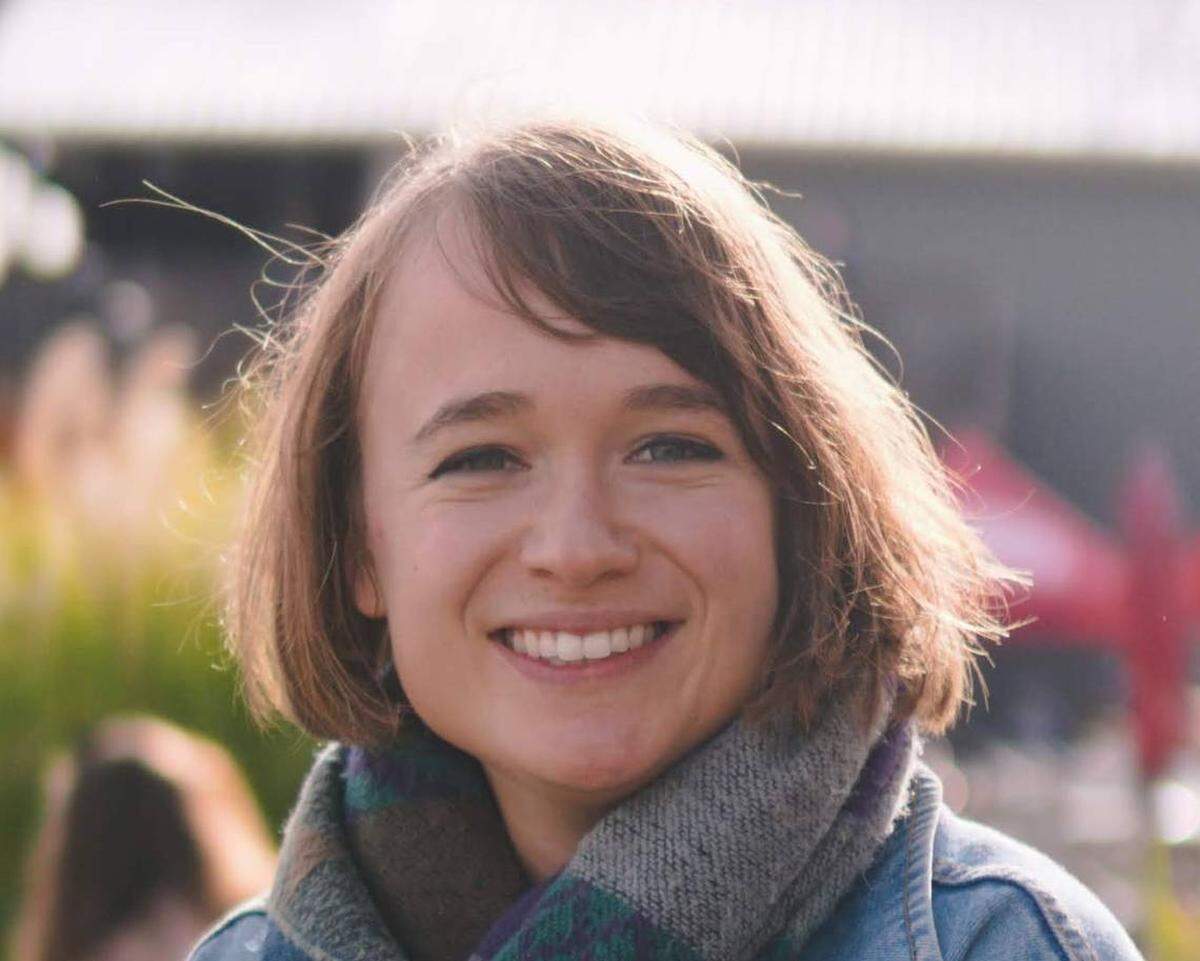
Widow of first Mississippian killed by COVID-19 has message for the Coast: Wear a mask
Howard Pickens was having trouble breathing.
Despite a history of lung disease, he was usually well enough to work two or three days a week at his barbershop, Fade 1 in Bay St. Louis.
On March 13, however, simply brushing his teeth left him short of breath. Howard’s wife, Brenda, took him to see his pulmonologist in Slidell.
Before they left the doctor’s office, Brenda, who had worked as a nurse for decades, asked if Howard could be tested for the novel coronavirus. The couple had watched on the news as the virus forced a mass shutdown in China and then ravaged Italy. That day, South Mississippi had its first confirmed coronavirus case in Pearl River County.
Howard had worried the virus would put him at particular risk because of his chronic obstructive pulmonary disease. And now he had one of the hallmark symptoms of COVID-19: severe shortness of breath.
But he didn’t have a fever, and no one without a fever was being tested, amid a serious shortage of test kits nationwide.
About a week later, on March 19, at 11:50 a.m., Howard Pickens died of complications from COVID-19. He was the first known Mississippian to die of the disease.
Within a few days, Brenda would be on a ventilator, battling the disease herself.
Now, as she goes on without her husband, she is frustrated and baffled by the number of people she sees ignoring public health advice to wear masks and practice social distancing.
“It just makes me very angry,” she said. “When we contracted it, there were still a lot of unknowns, but so many facts and scientific data have come out in the last few months, and people are just ignoring it.”
‘I am responsible for my fellow man’
Today, more than 1,000 Mississippians have died of the virus, and over 30,000 have been infected. But from Brenda’s perspective, too little has changed.
Most people she encounters daily seem not to notice or care they’re in the midst of a pandemic that has claimed more than 130,000 American lives, a disproportionate number of them Black, Latino or Native American.
Brenda says if she and her husband had known in early March the risks they were taking by maintaining normal routines, they would have made very different choices. She can’t understand why — when she runs errands or goes to physical therapy for the arthritis that’s a puzzling lingering effect of the virus — she’s often the only person wearing a mask.
The Pickens family doesn’t know where Howard contracted the virus. They assume it was from someone who came in for a haircut in early March, someone who had no symptoms, who maybe to this day does not realize they ever carried the virus. Some recent studies have shown that people without symptoms may cause up to half of all transmissions.
On Sunday, NPR reported that the number of new cases in Mississippi had risen 344% over two weeks, a higher rate of increase than any other state in the country.
At least in part, Brenda believes, that’s because so many people believe the virus is “a big hoax,” and are refusing to take simple precautions like wearing a mask.
When Brenda reflects on her family’s experience with coronavirus, the way it traveled unseen through their social networks until it sickened her and killed her husband, she sees a lesson in collective responsibility— a lesson too few Americans are heeding.
“It tells me I have to look out for my fellow man,” she said. “I am responsible for my fellow man.”
‘He called me his pitbull’
Brenda and Howard met at a Halloween party in Los Angeles in 1990 because neither was wearing a costume. She immediately liked his big, warm smile, and how easy he was to talk to. Howard liked that Brenda was honest, hardworking and tough.
“He called me his pitbull,” she said. “He said he didn’t have to worry about anything as long as I was a part of his life, because I wasn’t going to let anybody do anything to hurt him.”
Howard had grown up in Inglewood, California, and Brenda was raised near Rosedale, a small town in the Mississippi Delta. In the 1960s, the Ku Klux Klan burned a cross in her family’s front yard, and Brenda and her seven siblings lay on the floor as gunshots flew through their windows.
She moved to Gulfport, where she says she encountered none of the virulent racism and suspicion she had seen from white people in her hometown. She liked to ride her bicycle to work and the grocery store. Brenda spent most of the ’80s on the Coast before heading to California.
She and Howard married in 1992, and not long after moved to Mississippi.
Almost 10 years ago, Howard opened Fade 1 in Bay St. Louis, named for his signature cut and nickname, Fade. He would cut anybody’s hair: Black and white, men and women.
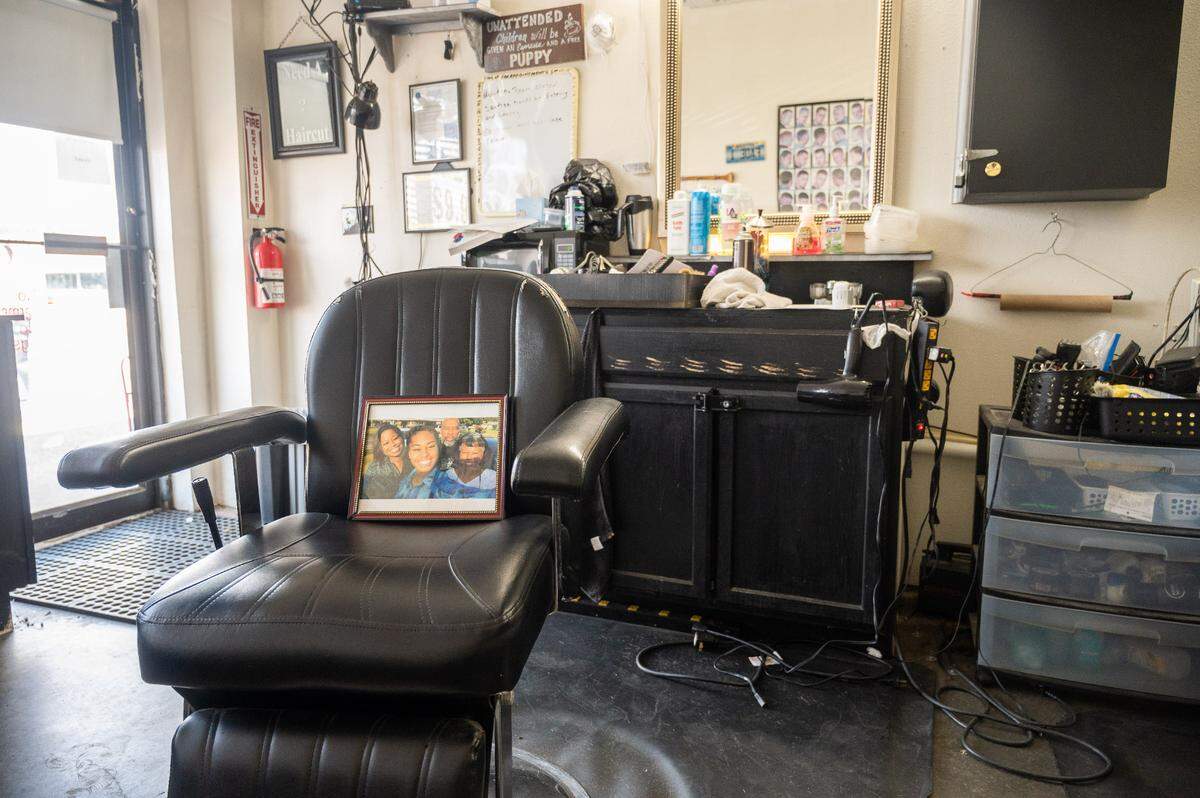
“He wanted to show people that hair is hair,” Brenda said.
A basic cut started at $9.99. Pictures on the wall displayed hairstyles customers could use for inspiration. Howard built the cabinets at each work station himself. Brenda bought him a sign that hung near the door, warning, “Unattended Children Will Receive A Cup of Espresso and A Puppy.”
The waiting chairs at the shop were always full of people talking, teasing each other about football teams. Howard was a 49ers fan, and it was fun to be around him.
He loved to share advice and encouragement with the young men and teens who came in for haircuts. After work, he liked to attend his youngest daughter Ivianna’s soccer games, go out to eat with Brenda, and watch sci-fi on television.
“He loved everyone,” Brenda said. “People started at 100% with him, and they tended to stay that way.”
A sudden fever
Less than a week after his first trip to see his pulmonologist, and less than 18 hours after he was refused a coronavirus test for the second time, Howard woke up delirious with a 104.8 degree fever. Brenda rushed to help him stand and put shoes on, and took him to the emergency room at Ochsner North Shore.
Because of his fever, he finally got tested. According to a statement provided by Ochsner Health, in mid-March they used “stricter testing criteria to best protect the most vulnerable individuals in our communities… patients may not have been tested if they were experiencing minor symptoms.”
Howard was able to speak in short sentences as a barrage of tests and X-rays continued. A few hours later, a doctor said Howard was presumed positive for the virus. He would be taken to the intensive care unit, and intubated almost immediately.
Brenda wasn’t allowed to go to the ICU, but she could picture all the different tubes on her husband’s body, the IV drip and the constant beeping of machines. She knew that because of Howard’s respiratory condition, he would likely have to be on a ventilator for a very long time, and that if he survived, it would be difficult for him to come off of it successfully.
After she left the hospital, Brenda took her own temperature. She was running a fever.
On the morning of March 19, she spoke on the phone with a nurse caring for Howard. By then, his test had come back positive, and his kidneys were beginning to fail. Brenda asked the nurse if he was on Levophed, a drug used to control heart rate in critically ill patients. When the nurse said yes, Brenda knew Howard was not likely to survive.
They discussed Howard’s living will, and how he had always said he didn’t want to be put on life support, how he wanted to die peacefully. Brenda’s temperature was continuing to rise.
Later that morning, her husband passed. At that point, almost no one in Hancock County or the state of Mississippi knew anyone killed by the virus.
When Melvin Cuz Barnes heard the news, he rushed over to the barber shop. A regular client at Fade 1 and the owner of a restaurant in downtown Bay St. Louis that Brenda and Howard liked, Barnes had enjoyed sports banter with Howard for years. When he pulled into the parking lot, he saw people inside. Everything looked normal. He thought it couldn’t be true.
Not long after that, Brenda was admitted to the hospital and put on a ventilator, and in a medically induced coma for 21 days. Neighbors stepped in to help, coordinating donations of money, groceries and food to support the couple’s two daughters.
When she was well enough to be taken off the ventilator, she had almost no strength. She couldn’t hear out of her right ear. She could,’t speak because her vocal chords had been irritated by the intubation.
And she did not at first remember what had happened on March 19, shortly before she was admitted.
Not long after she woke up, one of her doctors said, “I’m so sorry about your husband.”
Brenda didn’t understand what he was talking about.
“Then the memories flooded in,” she said.
She called her daughters and learned, again, that she had lost her husband.
In recovery
After several weeks of physical therapy at a rehab center in Gulfport, Brenda returned home.
But the effects of the virus and the ventilator persist. She has lost all of her hair, and her dermatologist told her it will never grow back the way it was. She previously had mild high blood pressure, but now her doctor is having trouble controlling it. She has trouble sleeping and daily anxiety attacks, which she previously only had on airplanes. Her sense of taste still comes in and out.
No one Brenda knows personally has suffered from the virus as much as her family, or been as sick as she was. She joined a Facebook group for survivors of the virus. They talk about their lingering symptoms and how grateful they are to be alive.
“At least you’re relating to people who truly from a firsthand point of view understand what it is you’re going through, what it is you’re talking about,” Brenda said, “not just people think you’re whining or offer this superficial support, because they really don’t understand.”
Fade 1 re-opened in mid-May, but closed a week later. The other barber who worked there decided the business was too difficult during the pandemic, with only one person to provide services to cover the rent.
Brenda is trying to decide whether to sell the business. She wants to keep it, because Howard turned it into a community institution. But she needs to find barbers excited to come work there. She’s hoping someone will turn up in the next few months, and that a grant from the state will help her pay the rent in the meantime. Otherwise, she’ll have to sell.
She and her family have decided not to hold a funeral as the virus continues to accelerate in Mississippi. If she held a funeral now, she worries, it would only contribute to the behaviors that frustrate her.
“I know how much people loved my husband and as soon as this is toned down, I’ll do a memorial service,” she said. “But not right now. It wouldn’t be the right thing to do or the right time to do it.”
At Fade 1, Howard’s thermos is still at his work station, next to the shaker of talcum powder. Brenda remembers how he liked his coffee, with just a little cream and sugar.
The phone rings and Brenda answers. Someone wants a haircut, and they want it at the barbershop Howard Pickens built. No, Brenda tells the caller, they haven’t reopened yet.
This story was originally published July 12, 2020 at 8:30 AM.