
Voters shoot down $325M Slidell casino. Developers claim the Coast is partly to blame.
Editor’s note: This story is from the New Orleans Advocate. More more related to this topic, visit www.nola.com.
St. Tammany Parish voters overwhelmingly defeated a controversial $325 million casino project near Slidell on Saturday, a victory for casino opponents that followed a high-temperature and costly battle for votes between the California-based developer and an alliance of churches, local businesses and some local elected officials.
The complete but unofficial returns late Saturday night showed 63% of voters rejected the plan to allow Peninsula Pacific Entertainment to build Camellia Bay, a casino and hotel, on a 120-acre tract of vacant lakefront land near the Interstate 10 twin spans. Peninsula Pacific Entertainment, also known as P2E, bought the land for about $14 million in February.
Though the ballot in St. Tammany contained only one item, voter turnout was nearly 32%, higher than projected, with 59,695 votes cast.
John Raymond, a Slidell pastor and one of the opposition leaders, said he was “elated” at the results.
“Stand Up St. Tammany and Chris Jean were a force to be reckoned with,” Raymond said of the efforts of local business owners to oppose the casino.
Jean was one of the chief opponents and, in the waning days of the campaign, offered free land for a sports complex in eastern St. Tammany to counter the casino company’s offer to fund a $35 million sports and recreation facility if the casino were approved.
“This is a message from the community that grassroots is back,” Jean said Saturday night.
Raymond said a group of 80 people were celebrating the defeat at the Wine Market in Slidell, one of the businesses that worked against the casino. “The voters believed the right information, and this will be a blessing for the parish for years to come,” he said.
P2E spokesman Jay Connaughton said the company was glad the parish was able to voice its opinion. “While we are disappointed in the outcome, we are grateful for all the relationships that were created and the time that the community invested in Camellia Bay,” he said.
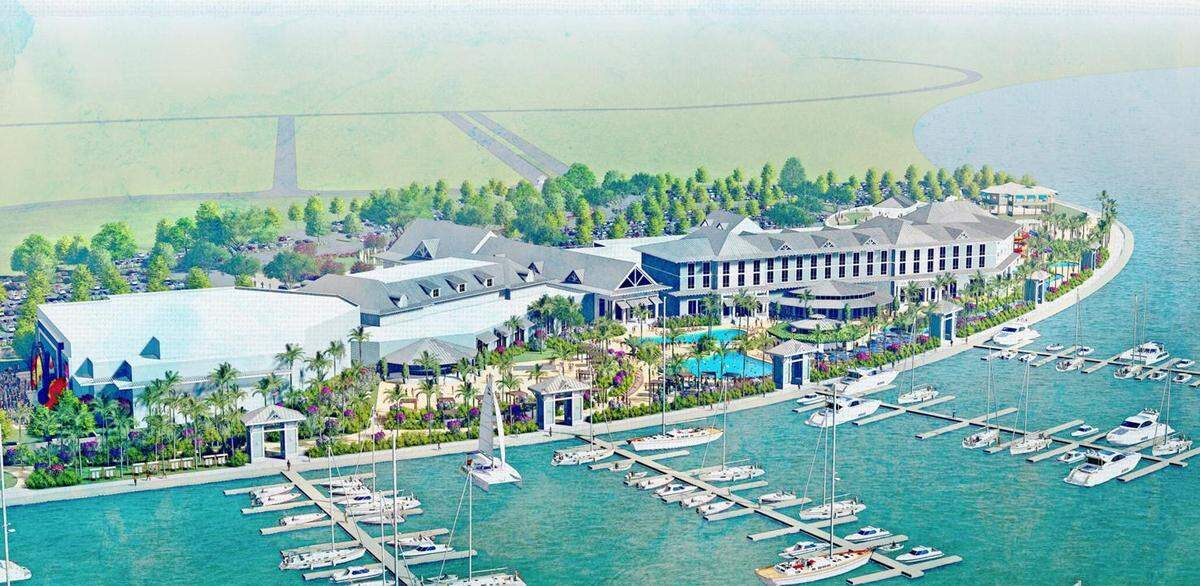
P2E and St. Tammany Corp., the parish’s economic development agency, had touted the project as an economic bonanza for the parish that would bring jobs and tax revenue, recapturing some of the estimated $380 million that Louisianans spend each year at Mississippi casinos. The defeat is also a win for those casinos.
Chris Masingill, executive director of St. Tammany Corp., said the defeat won’t stop efforts to recruit jobs and investments. “We know in economic development we can’t win them all. ... We’re back to work on Monday,” he said.
Although the conservative parish had ejected both casino gambling and video poker 25 years ago, proponents were banking on changed attitudes. A referendum on sports betting passed with 67% of the vote in St. Tammany last year, winning in every voting precinct. But Saturday’s vote mirrored the 62% that rejected casino gambling in 1996.
Opponents warned of high social costs, including a feared increase in crime and the siphoning off of customers from local businesses. At one public meeting, a local pastor said a casino would create a “mecca of immorality, crime and financial fallout.”
Initially, opposition to the project came mainly from Slidell-area churches, whose leaders said the casino’s deep pockets made the churches the underdog in what they called a “David and Goliath” matchup.
Indeed, P2E, spent $5 million on the campaign, according to filings with the state Board of Ethics. The company had also put up $100,000 toward the sports complex effort prior to the vote and donated $1 million to Hurricane Ida relief efforts in St. Tammany.
But the opposition was not without means. Two nonprofits that are classified as social welfare organizations, Watchdog PAC and Stand Up St. Tammany, mounted a vigorous effort with television commercials, billboards and mailers. It’s unclear how much they spent — the heads of the groups said they aren’t required to file campaign finance reports. But Scott Wilfong, of Watchdog PAC, said he anticipated that the campaign would reach $1 million.
P2E representatives claimed the anti-vote effort was funded by rival casinos on the Mississippi Gulf Coast, and in the week before the election, signs making that claim sprang up next to the “Vote CasiNO” signs that dotted parish roads.
Indeed, the defeat was a win for Mississippi casinos, which one analysis said draw some $380 million a year from Louisiana gamblers.
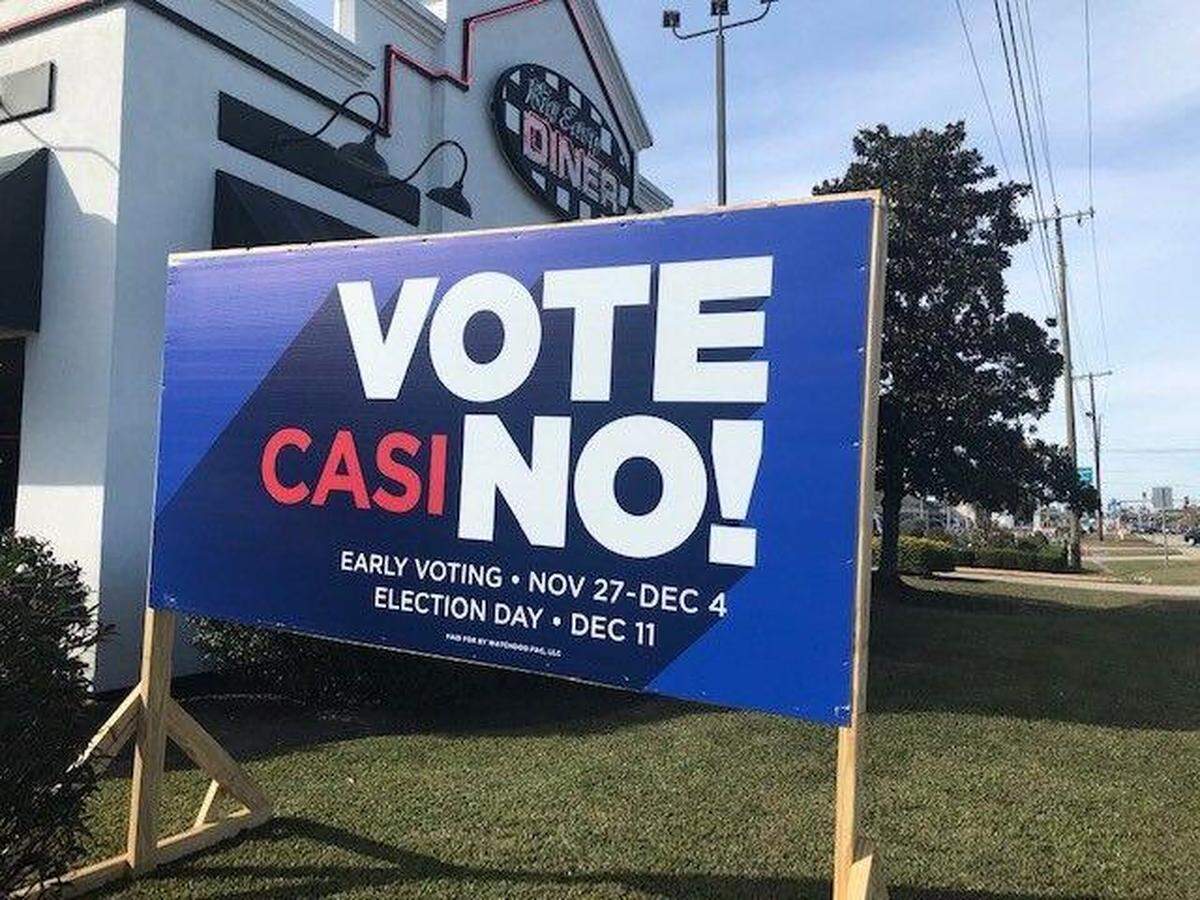
The election, originally set for Nov. 13, was delayed because of Hurricane Ida. The December date, and the fact that it was the lone item on the parish ballot, led to predictions of low turnout, which casino advocates feared would favor the opposition.
The anti-casino vote was seen as being more highly motivated, and even with slightly higher turnout than in the November election, that proved to be the case.
St. Tammany Parish residents first got wind of a potential casino in early February, when P2E went public with plans to move its riverboat license from the shuttered DiamondJacks casino in Bossier City to the site near Slidell.
Doing so required a parishwide referendum to reverse the parish’s 1996 no-casinos vote. But before that could happen, the state Legislature had to approve putting the referendum on the ballot.
St. Tammany lawmakers got behind efforts to get a bill through the Legislature. But opposition arose almost immediately. Eastern St. Tammany Parish pastors and their congregation members turned out in force at public meetings and at legislative hearings in Baton Rouge to fight efforts to put the matter to a vote.
A contentious spring and summer followed in Baton Rouge, where P2E had 19 lobbyists working for the measure and opponents drove to the State Capitol to speak against the measure in hearings.
Some elected officials jumped into the fray, with St. Tammany Parish Sheriff Randy Smith and Slidell Police Chief Randy Fandal standing up against the project. They were followed by Slidell Mayor Greg Cromer and the Slidell City Council, among others, including Lt. Gov. Billy Nungesser.
Casino opponents also challenged the election on constitutional grounds, suing to halt the vote in a legal tussle that went all the way to the state Supreme Court, which agreed with a lower court ruling that the Dec. 11 election could go forward and the constitutional questions could be handled afterward.
The defeat Saturday makes those questions moot.
Staff writer Marie Fazio contributed to this report.