
Oyster reefs to remain closed, possibly through March
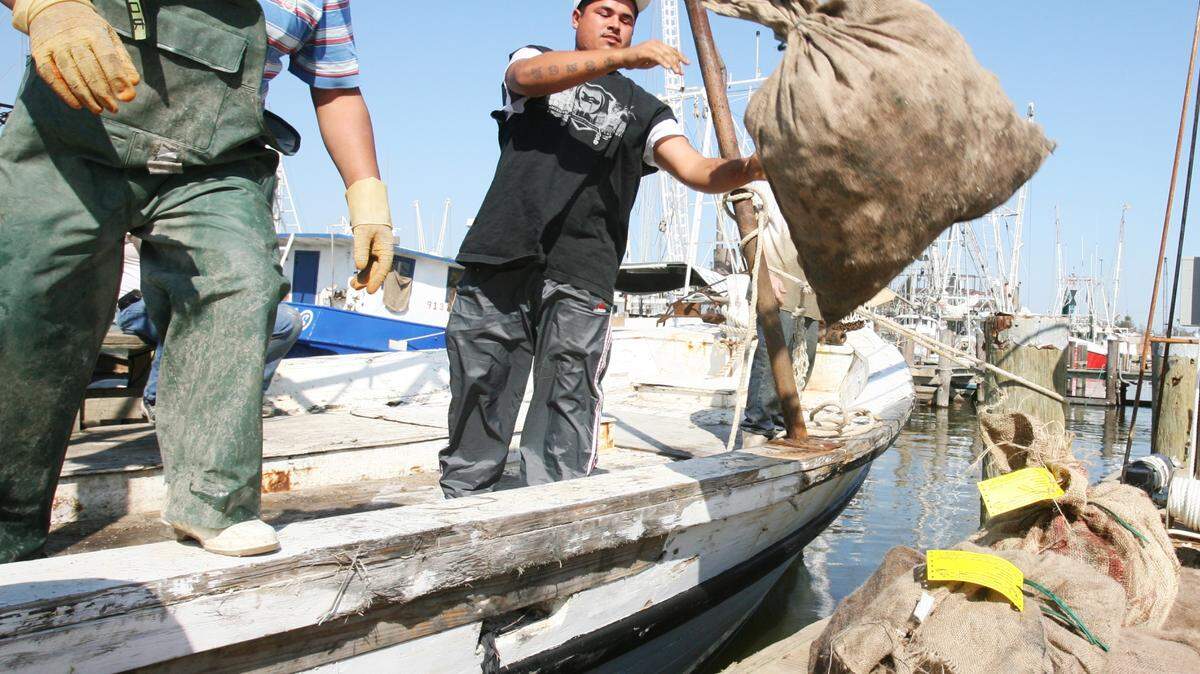
Weeks after a destructive algae bloom started making its way across the Mississippi Sound north of the barrier islands, the Commission on Marine Resources decided at a specially called meeting Wednesday to keep oyster beds closed until further notice, which could be as late as March.
The algae bloom has been responsible for 36 fish kills along area beaches, the largest occurring in Pascagoula and Biloxi. Several birds also have been found dead on the beaches, as well as a young dolphin, which washed ashore in Biloxi.
Director of Marine Fisheries Joe Jewel said water samples tested Monday still showed significant cell amounts of the destructive bacteria, some reaching as high as 700,000 cells per liter.
Oyster beds are closed when more than 5,000 cells per liter are detected.
"We closed the oyster reefs early in the event to prevent any public-health concerns," Jewell said. "But it will not kill the oysters."
The red tide algae bloom has not dissipated as quickly as oystermen would like, in part because of unseasonably warm water temperatures, the highest in five years, Jewel said.
But the phenomenon has Department of Marine Resources representatives baffled.
"We're in the winter, and we're having a historic event," he said. "We've never had (an algae bloom at this level, and we are at a loss as to why. This is something we would traditionally see in the summer when the water is warm, the salinity level is high and there are a lot of nutrients in the water."
The bad news has oystermen looking for other answers.
"Maybe you could use some of the oil-spill money and help put us back to work," Andrew Livings told the commissioners at the meeting. "We don't want something for nothing, but we need to go to work. It has affected the whole Coast,"
CMR Chairman Richard Gollott said he estimates it costs about $35,000 a day in lost oyster harvests when the reefs are closed.
"It's bad not to have something at Christmas," said oysterman John Livings, "but if it takes until March or so to get them open we are really going to be hurting."
DMR Executive Director Jamie Miller said several options for the oystermen are being explored, but it may take weeks before something can happen.
"We've explored giving grants to fishermen, but at this time it's illegal," Gollott said.
Oyster woes continue
Rudy Toler of Bay St. Louis is a fourth-generation commercial fisherman. He said the red tide means another hard season for oyster harvesters.
"It's been one thing after another -- last year it was shortened because of the rain, but at least there was an end in sight," Toler said. "There's no end in sight to this."
Less than 40 percent of the 35,000-sack limit had been harvested before the algae bloom closed the reef Dec. 11.
Toler is part of a growing group of fisherman who believe the DMR could be doing more to get the fishermen back to work.
"It's two days before Christmas, and we can't afford any presents or to pay our bills," he said. "I guarantee you the CMR members have money to pay for their Christmas presents. We don't have any money."
He said the commission should have already had a plan in place.
"Why didn't they come up with a contingency plan?" he said. "At least when the reefs shut down they could have had an action plan to put us back to work. Them saying they are sorry doesn't pay our bills. All they have are nice apologies."
Thousands affected
Other area oyster harvesters are facing hardships in the commercial fishing industry.
Thao Vu, director of the Mississippi Coalition for Vietnamese American Fisher Folks and Families, said the group comprises a large percentage of the Coast's commercial fishing community, which includes the shrimpers, oyster harvesters, dredgers and crabbers.
"This is the worst we've seen it in a long time," Vu said. "We haven't worked more than eight months total in almost six years. This affects thousands of families."
She also said the CMR should have had a backup plan in place.
"We've been giving them recommendations for years," she said. "We have been routinely ignored and dismissed. We are in the process of speaking to other agencies for help, including the (state Department of Environmental Quality) and the federal government."
The CMR voted to develop an oyster-restoration project immediately. The commission will meet again in January.
This story was originally published December 23, 2015 at 3:23 PM with the headline "Oyster reefs to remain closed, possibly through March ."