
Meridian WWII veteran: 'We did what we had to do'
The Meridian Star
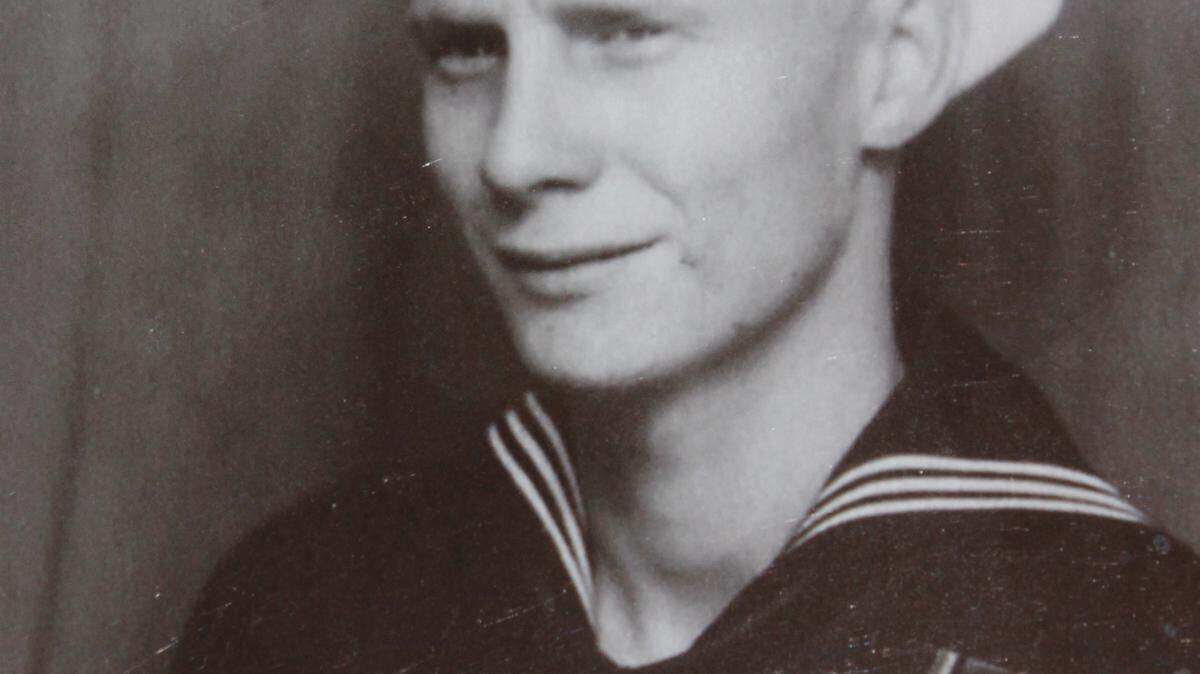
Seventy-four years ago, Jack Oliver was a young high school student when he volunteered to join the military. He didn't know his decision would take him around the world.
"I left to go in the Navy before I ever got my diploma," Oliver, 89, said. "I was 17. When they bombed Pearl Harbor, I was still in high school."
"My dad didn't want me to go," he recalls. "But he knew how I felt about it. I would've went anyway, I guess."
"I had been out of Mississippi, on church group trips," Oliver, who grew up in the Russell community, said. "But this was the first time I had been over there."
The young man entered the U.S. Navy on March 8, 1944.
"My mother, her health was pretty bad," Oliver recalls. "I didn't figure she would be there when I got back from the war. She passed away on the 22nd. I was still in boot camp in California. My dad pulled some strings to get me home."
After the funeral, Oliver was assigned to the USS Makassar Straits, a U.S. Navy escort carrier, where he served until June 1946.
"We went half the distance to the moon on that carrier," he says. "I was at Iwo Jima and Okinawa. I got up to die every morning when I was out there."
During Oliver's tour on the USS Makassar Straits, the ship was attacked by a Japanese torpedo bomber off the coast of Iwo Jima. Oliver manned a 40-millimeter gun and was wounded by shrapnel, earning a Purple Heart for his efforts.
Oliver says he wasn't necessarily prepared for combat, but he did what he had to do.
"When I went aboard that ship, we trained pilots," he said. "On Task Force 58, we had a thousand ships. We operated just 50 miles off the Japanese coast, right there in their backyard. They didn't teach us any of that in school. We did what we had to do and came home."
He pauses for a moment.
"Some of my shipmates were beheaded by the Japanese Imperial Navy," he says, looking off into the distance.
"But nothing ever bothered me," he says. "I was too dumb to be afraid. The only man that controls me is my Lord and Savior. He's my creator, and he protects me, as long as I believe in him. Normally, at my age, and what I've been through, I'd done been gone."
On to Korea
After World War II ended, Oliver went The University of Mississippi for two years, then joined the Army.
"I fell in love and married," he said. "And I didn't want sea duty. I wanted to be on the ground. That was a mistake."
Oliver was sent to Korea in the 1952, where he was a platoon leader.
"It was cold," he said. "That's when I regretted I wasn't back on that carrier."
While in Korea, Oliver earned a Silver Star for rescuing three wounded men at Pork Chop Hill. "You know what I used to tell my men? If you don't follow me, I'll kill you here. So they followed me."
"Sometime it's better to give ground than give lives," Oliver continued. "When I took Pork Chop Hill, I didn't take anybody alive. We didn't take prisoners."
He summed up his philosophy on war: "Anytime you have enemies, you have to get rid of them. You can't be a peacemaker. People don't like peace. They like war. They like to mess with you. The best way to get along with your enemy is to walk lightly and carry a big stick."
The Vietnam War
Later in his career, Oliver served in the Vietnam War.
"I had a medical unit in Vietnam," he says. "We had 36 enlisted men, seven officers, two nurses. It took three C-130s (transport planes) to deploy us. We were combat medics."
"We carried our weapons with us," he says, slapping his hip where a pistol holster would sit. "That was a war we shouldn't have been in. We took the French out of there, and got right back in the same war."
Oliver's son Terry also served in Vietnam as a paramedic sergeant, and was severely injured when his unit was ambushed. After a long recovery, he served in the U.S. and Germany. Unfortunately, Terry later died in a motorcycle accident. Oliver flew to California and served as his son's military escort back to Mississippi for his funeral.
Oliver remains proud of his and his son's sacrifice.
"With my time in the service, and Terry's time, we did about 45 years," he said.
"I'm Proud of What I've Done"
In addition to the Purple Heart and Silver Star, Oliver earned seven battle stars, 16 service ribbons, and two presidential unit citations with valor for his service.
Late in his career, he volunteered to fight during Desert Storm, but was turned down because of his age.
"I was in my late 50s," he remembers. "I figured I could run my outfit from my office. I wouldn't have to be on the ground."
When he wasn't on active duty, Oliver spent most of his military career working as a hospital engineer. He worked at the Strategic Air Command in Savannah, Ga., at an Air Force hospital in Japan and at a tactical hospital unit based in the Philippines.
After he retired from the military, Oliver worked as a civilian hospital engineer in Natchez and Savannah, Tenn.
After cheating death in three wars, Oliver remains reflective and grateful.
"There are things worse than death," he said. "Like not being able to do anything. You know I still cut my own grass, and I still have a garden?"
He breaks into a big smile. "Cabbage, collard greens, tomatoes."
"I'm proud of what I've done," he said. "I came from the greatest generation of all time."