
A Beloved Baseball League Counts Its Losses After Venezuela Quakes
EDITORS NOTE: ART ADV: With photos.); Fabiola Ferrero and Tibisay Romero contributed reporting.
LA GUAIRA, Venezuela -- Coaches were inundated with reports of missing children the moment the ground stopped shaking.
Dozens of children who play for Venezuela’s premier youth league were hospitalized, some newly orphaned.
There was Samuel Brito, a 12-year-old baseball phenom, whose rescue from his home’s rubble was captured in a dramatic video. He survived only because his parents shielded him from the collapsing walls that killed his mother and father, according to his relatives.
But many were unaccounted for, most likely trapped beneath collapsed homes. And a number of them -- their teams still don’t know exactly how many -- were dead, many perishing with their families.
There was Franco Gutiérrez, a 4-year-old baseball player, found embracing his mother inside his flattened home -- his father found in another room not far away, according to Miguel Moreno, who runs the baseball club Franco played on.
And there was Hiram Villarroel, 6, an aspiring pitcher who had begun playing less than a year ago, still missing somewhere in the debris of his pancaked apartment building, along with his parents.
“I feel helpless,” said Hiram’s godfather, Russell Vásquez, who has traveled daily to the ruins of the building where Hiram and his parents lived. “I just want to get inside the building and search all over, but I can’t.”
La Guaira, the coastal city hit hardest by back-to-back earthquakes on June 24, is home to about 600 children ages 4 to 17 who play in Los Criollitos, a beloved national youth league that is a pipeline for Major League Baseball talent and a pathway to upward mobility for children hoping to escape crime and poverty.
In a city where baseball is played proudly to the beat of samba and Caribbean beat-drums, the vibrant rhythm has been replaced by a heavy silence.
More than two weeks after the earthquakes, coaches are still tallying how many of La Guaira’s youngest players will never return to its dusty fields.
Jhorny Sojo, the president of Los Criollitos de La Guaira, the league’s satellite group in the coastal state, has barely slept trying to make sense of the tragedy and what it will mean for the future of youth baseball, just as it was undergoing a renaissance.
“I started going from hospital to hospital because we were getting photos of children, but at the time we still didn’t register the magnitude,” recalled Sojo, who narrowly escaped his own home alive. “People kept reporting: ‘This child is missing. This child is not over there.’ That’s when the hopelessness started to sink in.”
Some coaches and umpires also died, Sojo said.
The national death toll has already surpassed 3,800 people, a likely undercount as Venezuelans continue to find bodies, and rescue workers wind down efforts to find survivors.
In a nation where baseball is religion, the brutal blow to Los Criollitos -- which translates roughly to “The Little Homegrown Ones” -- has emerged as a painful microcosm of the devastation caused by Venezuela’s deadliest earthquakes in more than a century.
A local media outlet quoted Sojo as saying that more than 100 young ballplayers had died, drawing international attention to the tragedy. But Sojo told The New York Times that his words had been twisted, stressing that the league did not yet have a full tally. Out of respect for the families, he said, the league would release the death toll only once the search for survivors was over.
“I don’t have the certainty to tell you if it’s 100, if it’s fewer, or more, hopefully it’s way fewer, but we know for certain we’ve had losses,” Sojo said, trailing off. “Each one hurts because they are all children.”
Moreno, who runs a baseball club of 150 children in the seaside neighborhoods most battered by the earthquakes, said his club alone lost at least six children and 10 parents. Most, he said, had survived by happenstance: They were outside attending an annual Afro-Venezuelan festival with their parents.
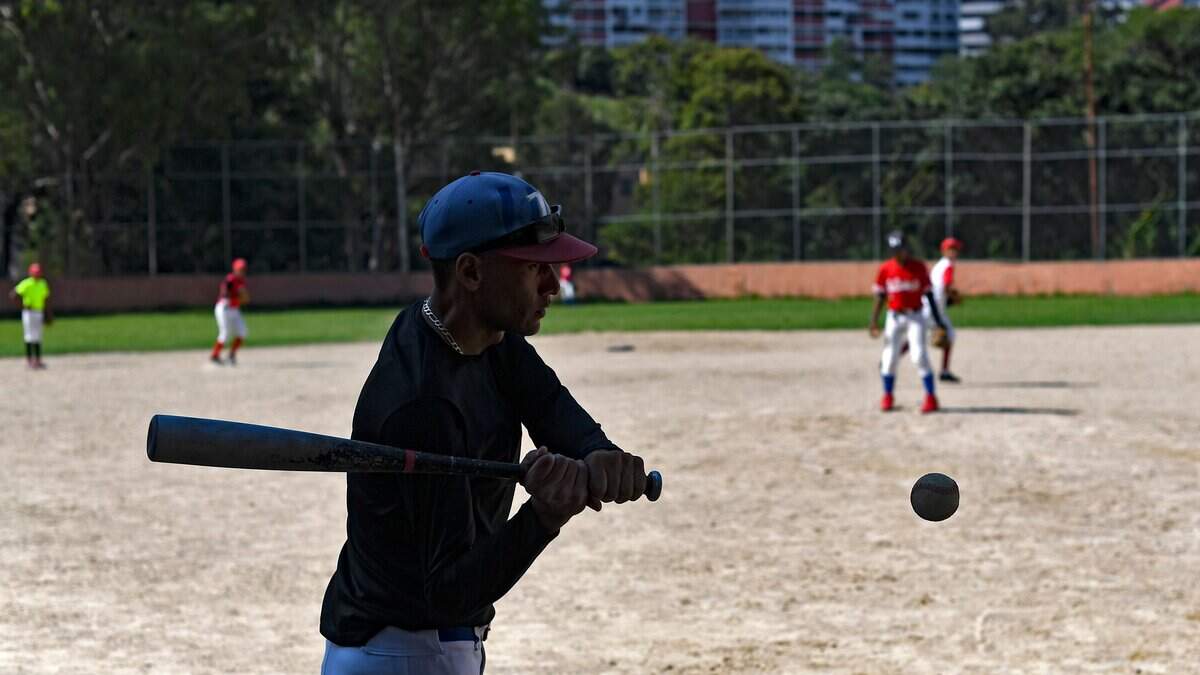
The fields where children once played have become open-air camps for families left homeless, forced to sleep in the stifling heat. Children search for pockets of grass between tents to swing at balls, distracting themselves from not knowing which teammates are alive.
Youth baseball has been suspended beyond La Guaira, with stadiums converted into collection and distribution points for medicine, water, diapers and canned foods.
“Everything is paralyzed,” said Delida Yepez de Quevedo, the national president of Los Criollitos de Venezuela.
Over six decades Los Criollitos has been a beating heart of youth baseball in Venezuela, celebrated not just as a Little League but also as a second home for children in a country plagued by years of economic misery.
The league has an estimated 40,000 players on thousands of teams, from the Caribbean coast to the remote reaches of the Amazon.
Children crisscross the country to play in tournaments that turn into large festivities, filling cities with music and parades: all-star games, Christmas tournaments, an annual championship to crown the best team in Venezuela across each age category.
The grassroots league -- separate from elite academies and Venezuela’s baseball federation -- has long offered hope to generations of impoverished children, who learn the names of MLB stars who were once Criollitos: Bobby Abreu, Omar Vizquel, Andrés Galarraga and José Altuve, among others.
“For all these kids, to play in Los Criollitos of Venezuela, it’s a trampoline, a showcase,” said Jean Amaro, the leader of the league in Barinas, a state in western Venezuela.
Most of them will never make it professionally, so the league prides itself on fostering character-building over raw competition, encouraging children to stay in school.
“We play to have fun,” said Raymer Flores, 10. “If a teammate strikes out, we support him. We’re practically a family.”
Raymer, who doesn’t know the fate of many of his teammates, survived the earthquakes, but lost his home and is now sleeping under a tarp with his family at a baseball field in La Guaira.
(BEGIN OPTIONAL TRIM.)
Nearby, Elizabeth Pacheco, 47, said she was hanging her children’s baseball medals after giving their home a fresh coat of paint when the building began to vibrate. She and her family fled their fourth-floor apartment unscathed. They have also taken refuge on the field.
Her son, Yeferson Seijas, a 12-year-old center fielder who has played since he was 6, wanted only to recover his most prized possessions: his bat and glove, as well as his four trophies, 14 diplomas and 17 medals.
His family, like others, is debating whether to move after losing everything, but has so far stayed put to give Yeferson a shot at achieving his dream: playing in the major leagues.
“I want to give my family a better future, buy my mom a house and help those who need it most, give them food,” said Yeferson, who takes pride in nearly making Venezuela’s national team this year.
Hiram Villarroel was following in the footsteps of his grandfather, also named Russell Vásquez, a Venezuelan infielder and a coach in the Mexican baseball league, who signed with MLB teams but never played in the major leagues because of injuries.
Hiram began participating in Los Criollitos last year, playing second base and outfield hoping to become a pitcher. His parents, Oxeny Villarroel, 53, and Jorlene Vásquez, 32, went to all his games, with his mother even missing her Saturday university classes to see him play.
“Going to see him was a show,” said Hiram’s godfather, Russell Vásquez. “He would get super happy, and would also get annoyed when he lost. He lived the game.”
The family was at home when the earthquakes struck. Their bodies still have not been found.
(END OPTIONAL TRIM.)
La Guaira is not unfamiliar with tragedy.
Many parents and grandparents endured days of torrential rains and mudslides in 1999 that killed tens of thousands, sweeping homes into the ocean and burying entire towns.
The scrappy, beleaguered city slowly rebuilt, leaning for respite on its professional baseball rivalry with its cosmopolitan neighbor Caracas, the country’s capital.
But its youth baseball league had stalled until a resurgence in recent years.
The league, smaller than other powerhouses in the interior, began recruiting more coaches and attracting more children. La Guaira’s teams became increasingly competitive, going deeper in national tournaments.
“We would finish as runners-up and we would welcome the children as world champions,” said Sojo, the league president in La Guaira. “We were joy, we were the ones who gave flavor to tournaments. Other teams would chant, ‘La Guaira is here!’”
Now, the fate of La Guaira and the future of Los Criollitios are bound by the same agonizing uncertainty.
Not only will La Guaira have to grapple with a huge loss of life, Sojo said, but also with reconstruction and the likely flight of families, potentially hollowing out the city.
“In the end, if 1,000 died or 1 million died, they’re gone,” he said. “But we’re going to be left with many children in a state of inequality with no way of continuing their sporting career. How are they going to play? Who is going to cover their costs? How are they going to have a glove, a ball, a bat, a uniform again?”
“The blow was lethal,” he continued. “The earthquake didn’t break us, it swallowed us.”
This article originally appeared in The New York Times.
Copyright 2026 The New York Times Company
This story was originally published July 10, 2026 at 10:36 AM.