
Columnist Kat Bergeron: Cockfighting is no rarity in Gulf region
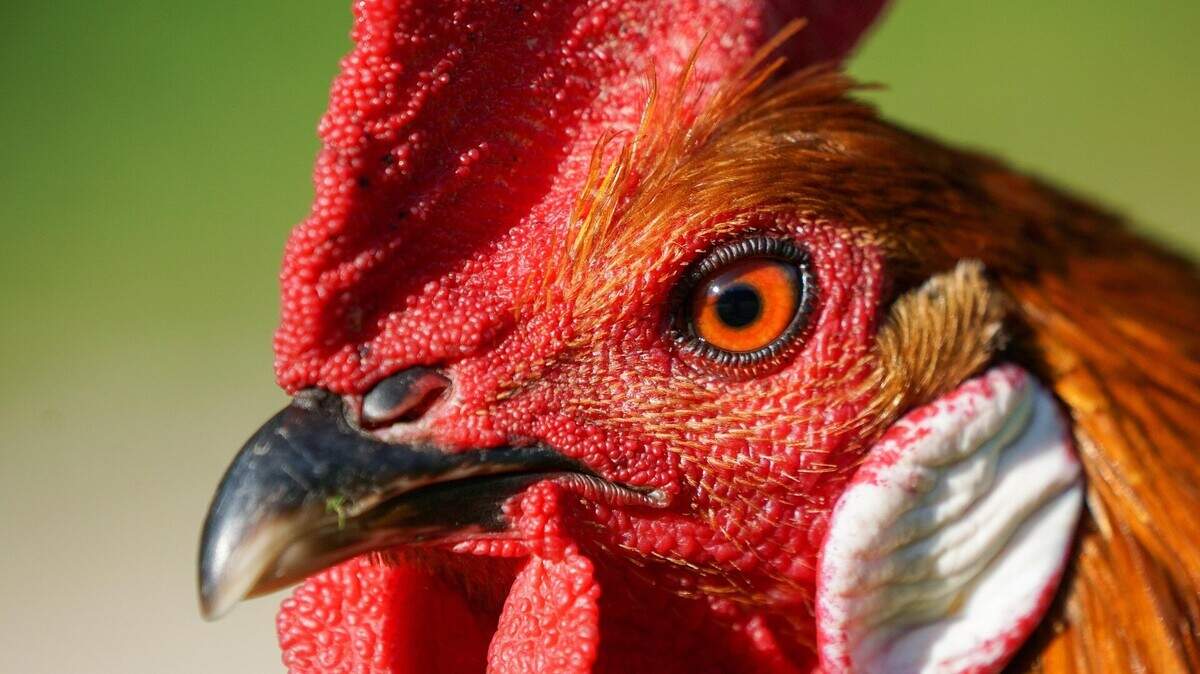
Does the thought of bloodsport give you the heebie-jeebies?
It does me.
How we humans can place bets and get pleasure out of watching roosters — or dogs, hog, bulls or bears, for that matter — draw blood or fight to the death is beyond my comprehension.
You’d think “civilization” long ago outgrew the “entertainment” of ancient Roman gladiators, where about one-fourth those men died in the fighting arena as spectators cheered.
Such “human” bloodsport was abhorrent by the Age of Enlightenment – that historical period of intellectual and philosophical upheaval that turned man more toward knowledge and scientific inquiry.
Apparently, the “lesser” animals weren’t so lucky, even in this Contemporary Age that encourages broader thinking. The topic today is roosters deliberately turned into lethal fighters, although bloodsport certainly isn’t limited to cockfighting. It encompasses any contest with animals that involves killing and bloodshed.
Have you been following the reporting of Margaret Baker and other Sun Herald journalists who broke a story in May of a raid on a Harrison County cockfight? If, when you heard this news of an organized cockfighting ring, you thought it a one-off for the Gulf Coast region, you’d be wrong.
Long ago, I quit being surprised each time I find another historical headline about another local cockfight while researching an entirely different top in the microfilmed and digitized versions of this 140-year-old newspaper.
I also realized how close to home this bloodsport was when in the mid-1990s I interviewed the local legend, Verta Lee Swetman, about her time as the Biloxi-based U.S. Commissioner who secretly signed the first search warrants for Klu Klux Klan members suspected of murdering three civil rights workers. Their bodies were discovered in an earthen dam near Philadelphia in 1964.
My assignment was to write a feature on Mrs. Swetman’s life and association with the U.S. Southern District, an unusual role for a woman of that time. As she headed into retirement, among the stories she told me was one of her beloved husband, J.T., who like many rural men of his age was familiar with cockfights, even though illegal
She related the time Mr. Swetman was watching a fight when lawmen raided the site. He escaped and dived under a stack of hay, only to be discovered anyway. As he was being pulled out, Mr. Swetman admitted, “My wife is a U.S. Commissioner. Please don’t take me to jail.”
Mrs. Swetman’s husband and well-known doctors and lawyers were hauled off in a bus that day.
Such stories do have humor, although I can’t support the “why” of these illegal gatherings.
Mississippi outlawed cockfighting in 1880 but classified it as a misdemeanor with a low fine. The lack of significant consequences led the way for the Magnolia State to continue to be a site for local and traveling cockfights.
The state finally changed the law in 1972, and today it is a misdemeanor for a first offense of participating in, staging or attending a cockfight, with a fine up to $1,000 and/or six months in jail. Animal rights groups now seek to change that charge to felony, to match a majority of other states.
Today if someone is arrested for cockfighting, they’ll also likely face federal laws under the Animal Welfare Act, as is happening in the recent Harrison County case.
And yet, the fighting of roosters continues. This uglier side of human nature still holds sway for some, and supporters might rightly point to history and cultural tradition.
Rooster fighting has been around at least since 460 B.C. in Asian countries. It was first documented by Westerners when Ferdinand Magellan observed the tradition in his 1521 Philippines exploration.
Some of America’s early presidents were reportedly cockfight fans, but back then it was still legal as a tradition brought by European settlers. There’s a dubious story touted by the gamecock industry (surprisingly still a going concern for international trade) that Abraham Lincoln got his name from his impartiality while judging a cockfight.
A few countries – among them several Mexican states and still the Philippines – continue to have legal cockfights. Interestingly, anthropologists have observed that younger generations often become the crusaders to make animal fights illegal.
I personally experienced how righteous cockfight supporters are when I wrote a column in the 1990s about bloodsports, particularly honing in on the added cruelty of cockfighting when razor-sharp metals, called gaffs, are tied to rooster legs to make them more lethal. Although I’ve unsuccessfully tried to locate that article through digital archives, its aftereffects are forever recorded in my own memory.
Within days of publishing the Chronicle, I received an anonymous email that I’d soon find a dead rooster on my Biloxi porch. This was the early days of computer Internet, back before cyberbullying was an everyday occurrence, so I was shocked but not worried that this would really happen. It didn’t.
I have wondered, though, what would have been the modern cyber response to columnist Ray Thompson, who wrote a mid-20th Century history column for this newspaper titled “Know Your Coast.” In February 1959 he featured Ann Callen, an anti-cockfight crusader who became postmistress in the waterfront community later annexed by Gulfport.
Thompson explained that in 1870s Mrs. Callen “waged a relentless one-woman war on the local persistence of the menfolk to indulge in this ancient and exciting pastime.
“Unfortunately the Callen home was in sight of the livery stable where the men of Mississippi City were in the habit of bringing their birds for a bit of competitive sport and a few small bets on the side.
“But time and again local cockfight fans had to call off their fu, for whenever Ann saw the male population of Mississippi City surreptitiously sneaking into Pierce’s livery stable she would throw her apron over her head, stalk over to the livery stable and in no uncertain voice, break up the proceedings.
“It was one of the favorite diversions of Mississippi City citizens to watch the men come streaking out of the livery stable with their favorite cocks tucked under their arms and head for their home without an argument.”
That part of Thompson’s column was pure local history and might not have solicited anonymous e-mails from today’s cockfight lovers. I wonder, though, about his observations on cockfighting:
“To the average person cockfighting simply doesn’t exist. Television never features it, the daily press and radio carry no scandal about it and the magazines rarely mention it. As everybody knows it is against the law practically all over the world. Yet it is the one sport common to all nationals and popular in most, including our own.
“It is estimated that in this country alone at least $10 million annually ($44 million today) are bet on the battling birds. This is exclusive of the countless millions that are enthusiastically spent in the breeding, training, transportation and actual fighting of the gamecocks.
“There are two monthly magazines, both published in the South, devoted exclusively to the interest of the nation’s gamecock breeders, fighters and fans...which would indicate that cockfighting in these United States is far from a feeble or fleeting hobby.”
Openness of the illegal cockfighting scene has diminished in the 66 years since Thompson wrote his column, especially with passage of the Animal Fighting Prohibition Enforcement Act. That 2007 act gave federal law enforcement teeth, or shall we call them leg gaffs, to the recent Harrison County raid.
Kat Bergeron, an award-winning veteran reporter and feature writer who specializes in Gulf Coast history and sense of place, is retired from the Sun Herald. She writes this Gulf Coast Chronicles column as a freelance correspondent. Reach her at:
BergeronKat@gmail.com
Or, at Southern Possum Tales, P.O. Box 33, Barboursville, VA 22923