
One writer's passion: Camellia show to honor Eudora Welty's love of winter flower
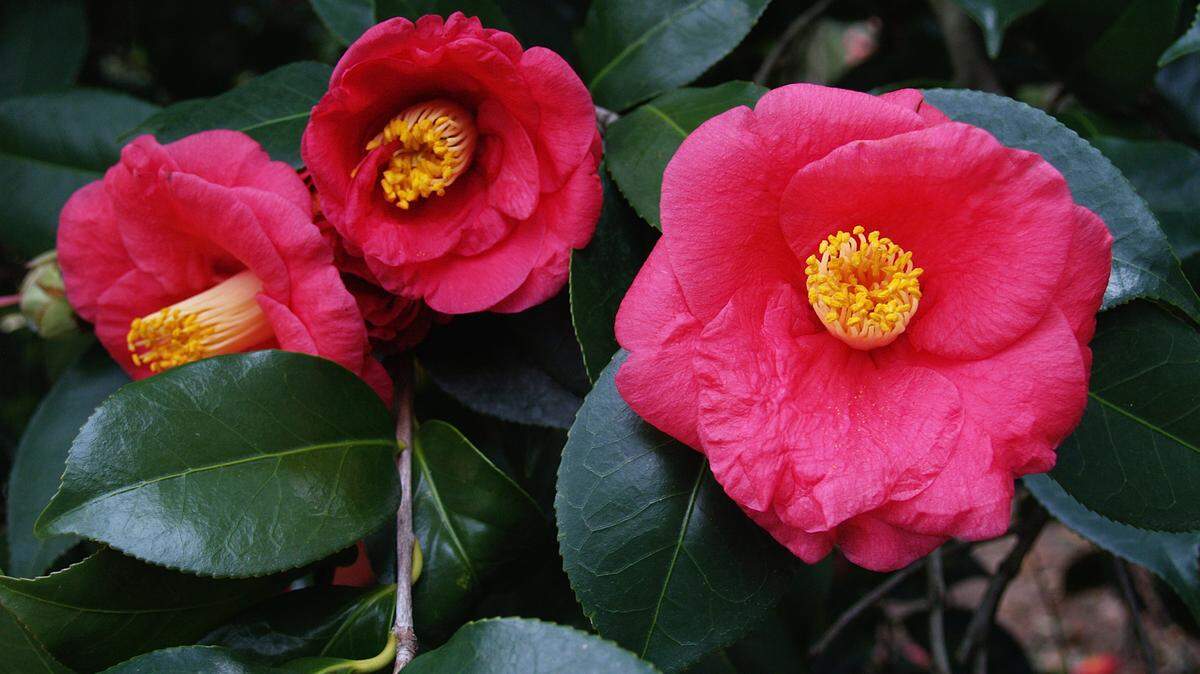
Eudora Welty is known for her love of Mississippi and her celebration of this state's culture in both words and images. Her writings received more than 40 major literary awards, including the Pulitzer Prize in 1973. Photography was a lifelong passion and her brief time as a photographer for the Works Progress Administration documents the humanity of Mississippi natives during the Great Depression. A lesser-known passion of Welty's was her love of gardening, particularly the cultivation of her favorite flower, the camellia.
Eudora Welty's appreciation of camellias will be honored at the Mississippi Gulf Coast Camellia Society Show on Nov. 21 at the Lyman Community Center, 13742 U.S. 49, Gulfport. The show, which is free and open to the public, will be from noon to 4 p.m. and will feature more than 800 blooms. Specialty camellias, including many featured in Welty's garden, will be offered for sale.
The Mississippi Gulf Coast Camellia Society Show is an American Camellia Society-sponsored show judged by camellia experts from five states. Blooms can be entered for competition before 10 a.m., and a novice category is offered for local gardeners. Anyone with a beautiful bloom is encouraged to submit it for judging, and experts will be on hand for bloom identification. Coastal residents are invited to come and view camellias, learn about camellia cultivation and engage in camellia waxing.
The gardens surrounding the Welty House at 1119 Pinehurst St. in Jackson were mostly designed and maintained by Welty's mother, Chestina. The 1940s saw an increase in gardening by Eudora Welty, who planted many camellias during this decade. She used profits from the sales of stories to buy seeds and plants.
"There is a danger that I will pour all my riches into camellias," she wrote in a letter to her literary agent Diarmuid Russell, a fellow gardener. Welty sought out favorites and propagated them through cuttings, grafts and seeds. The camellias in her garden represented her growing success as a writer.
"Most of them stand for some story sold, though some are raised tenderly from stolen cuttings," she wrote in 1945.
Her home featured a porch where friends and family would gather to socialize and play word games. The porch overlooked a grassy side yard that in earlier times had been a popular spot for croquet, golf and photographs. In the early 1940s, Welty began to transform the side yard into a camellia garden. The cool weather-blooming evergreen would provide spectacular blooms starting in the fall and continuing into the spring.
"In about ten years or so there will be a tall hedge of camellias all the way around the yard on one side, if they keep thriving, and I will put a bench out then, and you must expect to sit on it and enjoy such grandeur. There are fall and spring flowering, early and late, single and double, red, white, pink, solid, striped, and variegated, though of course just a small representation of their family," she wrote to Russell in 1945.
Camellias originated in China and Japan and made their way to Europe and then to America via merchant ships.
The first recorded specimen to arrive in England was the white "Alba Plena" in 1792. Originally grown in greenhouses in the northern U.S., camellias also thrived outdoors in temperate coastal regions.
They love acid soil and semi-shade, particularly the shade of pine trees, making them an ideal plant for Mississippi gardens.
Camellias keep their glossy green foliage year round and are hardy plants requiring little care. They flower in the fall and winter, providing visual interest when little else is blooming in the garden.
They can be propagated easily from cuttings and grafts, leading to hundreds of registered varieties.
The American Camellia Society's website, americancamellias.com, features a Camellia Encyclopedia, which displays more than 700 blooms. More than 150 varieties will be on view at the Camellia Show on Nov. 21.
In a 1943 letter to a friend, Welty sketched her plan for a curving camellia border.
In the sketch, she labeled the plants and asked him to envision the colors. Some of the camellias she included were antique varieties. The oldest arrived in Germany from Japan in 1832 and is named Tricolor. It is a waxy cream with streaks of carmine and has a semi-double bloom with a slightly cupped form.
Another very old bloom she planted was Mathotiana, popularly known as Purple Dawn due to its purple cast. This camellia often has a rose form but also can be a formal double; it is a midseason bloomer. It arrived in Charleston, S.C., in the 1840s.
Welty included the enduringly popular Pink Perfection, a shell pink formal double flower with a long blooming season. Although this camellia arrived in Sacramento, Calif., from Japan in 1875, it continues to grace award tables at camellia shows throughout the United States.
A deep pink and large semi-double camellia known as Empress arrived in England in 1887. Its common name in the South is Lady Clare. In addition to including this lovely bloom in her garden, Welty named a character in her book "Delta Wedding" after this popular camellia.
These four blooms as well as another Welty-planted camellia, Victory White, will be on sale during the Camellia Show on Nov. 21.
The history and restoration of Eudora Welty's garden is documented in the book "One Writer's Garden" by Susan Haltom.
The Eudora Welty House, built in 1925 and on the National Register of Historic Places, and its garden are available for tours Tuesday through Friday.
Jana Harry, is a camellia show judge and member of the Mississippi Gulf Coast Camellia Society.