No, it’s not a gas leak or rotten eggs. See how to keep this insect out of your MS home
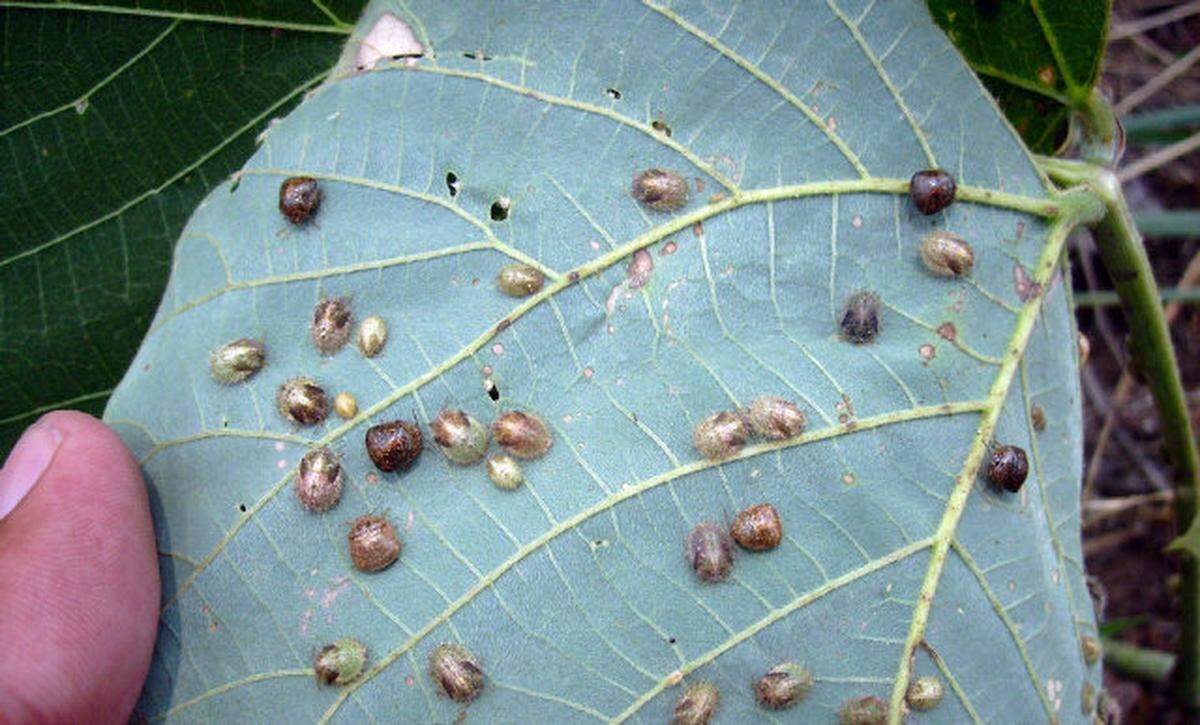
No, your yard has not been invaded by green ladybugs. Those little critters are Kudzu bugs and once fall arrives, so will they. They’ll be in your yard, your kitchen, your garage and anywhere you have light-colored areas.
University of Georgia entomologist Dan Suiter warns, “These are flying bugs that move from one site to another. You spray the ones you see today and more will come tomorrow.”
What is a kudzu bug?
Scientifically known as Megacopta cribraria, they are an invasive species originally native to Asia, and are also known by a handful of other aliases: bean plataspid, lablab bug, and globular stink bug.
Suiter says they are in the stinkbug family and are often confused with ladybeetles. The distinction is the foul-smelling odor that is often mistaken for a gas leak and can be quite overwhelming when you smash them.
They were first discovered in Vicksburg in 2012, where both adult and immature bugs were found at multiple sites. They love soybean plants and kudzu, but as the temperatures start to cool off, they seek shelter in warmer climates — like your kitchen and garage.
They may resemble a ladybug in size and shape, however, they are olive green in color and far more destructive (and stinkier) than their harmless red and black cousin.
What is the impact on your home or yard?
While they aren’t toxic or dangerous, per se, they pose quite a nuisance, according to Pest Advisors. They invade homes in search of overwintering and congregate on light surfaces. They are small enough to find even the smallest opening and are often found on counters or cabinets throughout the home or garage.
They don’t bite or sting but can cause skin irritation from the smelly, yellow-tinted excretion emitted when crushed. This substance can cause a rash, swelling, or even blister-like welts in some sensitive individuals.
Anybody with a yard in the South has had to contend with kudzu, so these little pests might be a gift. These bugs, contrary to popular lore, were not introduced as a way to control kudzu even though they are an effective way to keep it at bay.
A study from Mississippi State University found that “When the species feeds on kudzu, it is beneficial, as it was determined that the insect could stall biomass of Kudzu growth by 30%.”
How do you get rid of these bugs?
A major problem when dealing with a kudzu bug infestation is that their food source, kudzu, is so abundant. But it’s not a lost cause and there are some effective ways to eliminate them.
Remove the kudzu
Try persistent use of herbicides although it can take many years.
Hand digging is also an effective method, although fairly labor-intensive.
Introduce animals, like goats, that use kudzu as a food source.
Seal windows, doors, vents and cracks an eighth of an inch or wider.
Look for products that end in ‘thrin,’ such as bifenthrin, cypermethrin, lambda-cyhalothrin, cyfluthrin and permethrin.
For inside, vacuum up the bugs and place them in hot soapy water. Avoid crushing them because the substance they emit has a terrible odor and can stain surfaces.
How do you handle these little critters when you come across them? Sound off in the comments, or you can email me or find me on Instagram.
This story was originally published August 14, 2024 at 12:44 PM.