
With manatee numbers climbing, US Fish and Wildlife looks at new status
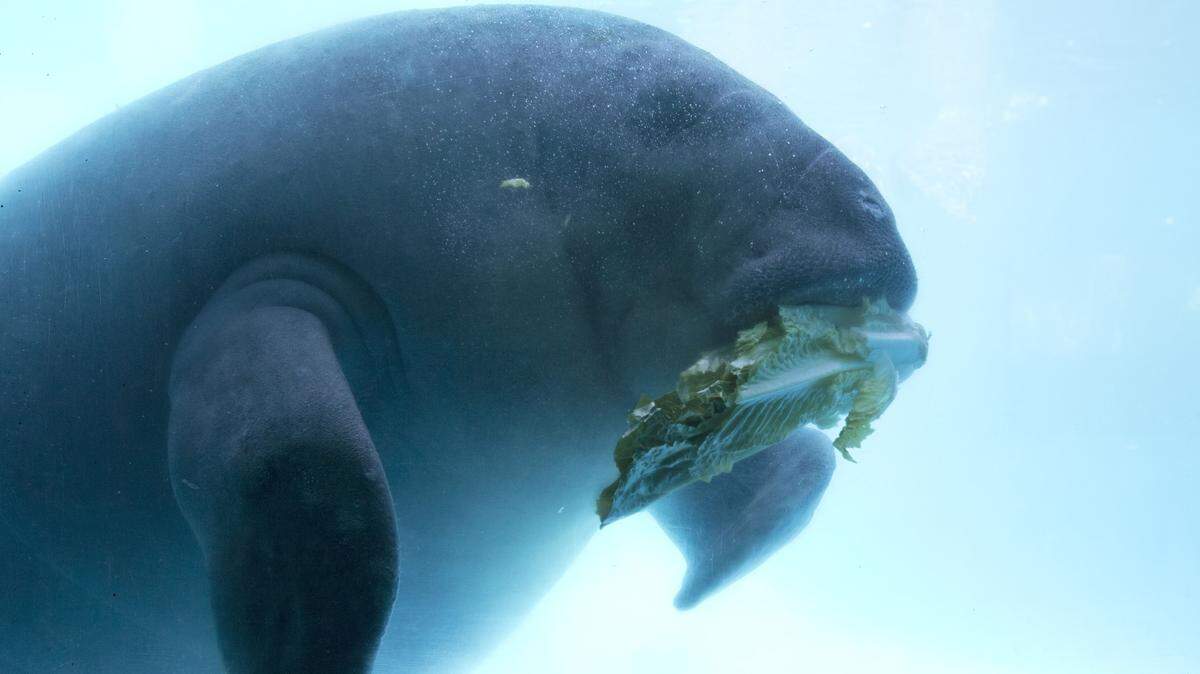
MIAMI -- The U.S. Fish and Wildlife Service announced Thursday the West Indian manatee is proposed to be downlisted from endangered to threatened status under the Endangered Species Act. This comes as a result of significant improvements in its population and habitat conditions, and reductions in direct threats.
This is the manatee seen in the southeastern part of the country, including the Gulf.
The proposal to downlist the species to threatened will not affect federal protections afforded by the ESA, Fish and Wildlife said. It plans to remain committed to conservation actions to fully recover manatee populations.
The ESA defines an endangered species as one in danger of extinction throughout all or a significant portion of its range, and a threatened species as one that is likely to become endangered within the foreseeable future.
Given its review of the best scientific and commercial information available, including analyses of threats and populations, Fish and Wildlife proposes that the West Indian manatee no longer falls within the ESA's definition of endangered and should be reclassified as threatened. Fish and Wildlife will publish its proposal in the Federal Register Friday, beginning a 90-day comment period in which everyone is invited to submit scientific or technical information that will aid the agency in reaching its decision.
"The manatee is one of the most charismatic and instantly recognizable species," said Michael Bean, principal deputy assistant secretary for Fish and Wildlife and Parks at the Department of the Interior.
"It's hard to imagine the waters of Florida without them, but that was the reality we were facing before manatees were listed under the Endangered Species Act," he said. "While there is still more work to be done to fully recover manatee populations, their numbers are climbing and the threats to the species' survival are being reduced. Today's proposal is a positive step that recognizes the progress citizens, conservation groups, the State of Florida, the Commonwealth of Puerto Rico and our own Fish and Wildlife Service employees have made working together."
The current manatee-protection measures would remain in force if the species is downlisted.
These measures by state and federal agencies, and industries, resulted in the establishment of more than 50 manatee-protection areas and have played a key role in reversing the species' decline.
Retrofitted water-control structures have resulted in significantly fewer manatee fatalities, Fish and Wildlife said, and power companies are working with federal and state conservation managers to address warm-water outflows at wintering manatee congregation sites.
Florida counties have made significant progress in developing and implementing manatee-protection plans and citing boat facilities to reduce boater impacts on manatees.
This story was originally published January 7, 2016 at 7:17 PM.