
Poinsettia season is just around the corner
We all knew it was going to happen some time.
That change in the seasons is an inevitable event as we move into the later months of the year. But I'm not referring to the time of year when we start planting all of the gorgeous cool-season bedding plants like pansies, violas and dianthus. The change I'm talking about is from Halloween to Christmas; it seems like it happened overnight. Maybe it had something to do with the time change, that whole falling back that also occurred this past weekend.
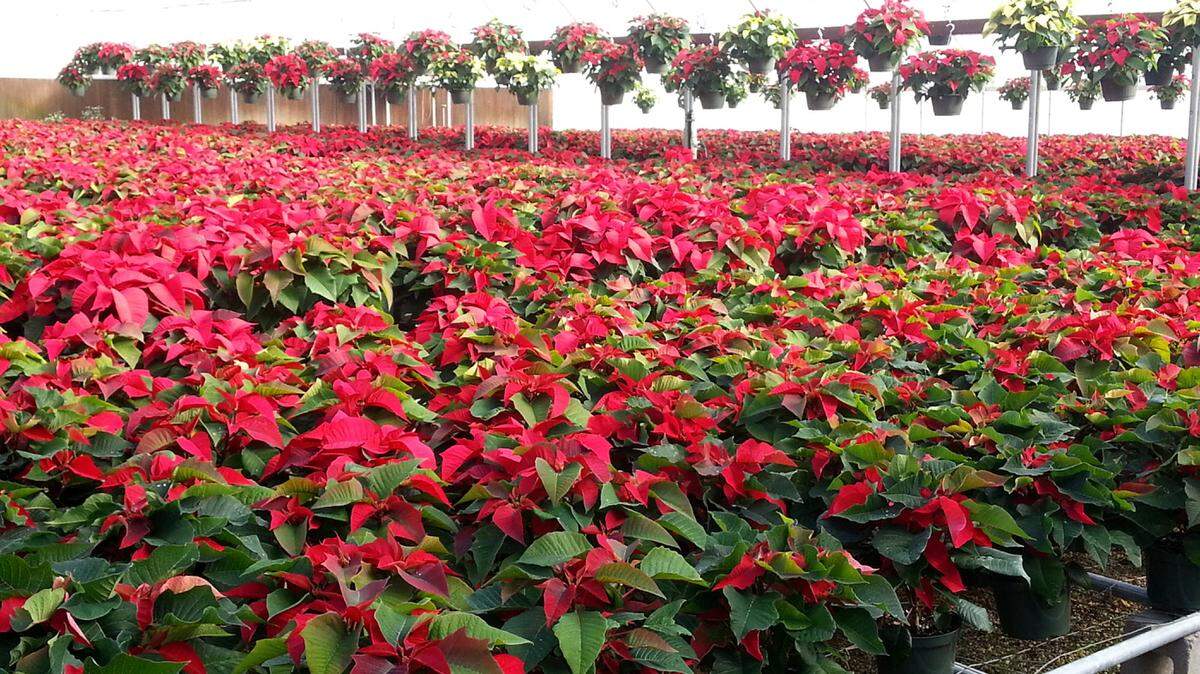
I like to write about plants for the changing seasons, and there's no better plant to write about now than the poinsettia. I'm being a little proactive, as I have not seen any poinsettias in the garden centers -- yet. But after visiting poinsettia growers last week, I know it's only a matter of days before you can have the first poinsettia proudly displayed on your block.
There are colors to fit almost any decoration scheme. Of course, there are the traditional bright red poinsettias, but I really like the whites, pinks and marbled bicolors, too. There are also maroon varieties to help celebrate the success of the Bulldogs. There are even rose-flowered selections. And if that's not enough, growers are changing colors by painting the plants and adding sparkles.
I get questions about poinsettia flowers each year. However, what most people think of as flowers are actually modified leaves called "bracts." The true flowers are the yellow/green bead-like structures called "cyathia." Your poinsettia will last longer if you select plants with unopened or only partially opening cyathia. You can even carefully remove these structures for longer lasting color.
Here are some care tips to help keep your poinsettia looking good long after the Christmas holidays. Poinsettias need comfortable room temperatures and at least six hours of indirect sunlight. When poinsettias are grown in the greenhouse, the temperature should be about 72 degrees during the day and 60 degrees at night. The closer you can come to providing this temperature range, the longer your poinsettia will last.
The absolute most important thing to remember about poinsettias is to not overwater them. Poinsettias are sensitive to wet feet, and root rot will set in very quickly. Before you water a poinsettia, the potting mix should feel dry to the touch. Remove the decorative sleeve, and water the top of the container over the kitchen sink. When the water has finished draining, replace the decorative sleeve.
Don't let the leaves or bracts touch the window glass. Poinsettias are fragile plants, and the stems can break quite easily from mishandling. Pay particular attention when removing the paper or plastic sleeves that can hide any damage. Never try to slide the shipping sleeves off because of the potential for damage. Always tear or cut off the sleeve.
Contrary to widely reported information, poinsettias are not poisonous to pets. The latest information from the American Society for the Prevention of Cruelty to Animals indicates eating poinsettia leaves will induce only GI tract irritation. As with all ornamentals and houseplants, they're not meant to eaten by animals. To be on the safe side, keep the poinsettia out of your pets' reach.
Gary Bachman, is a professor of horticulture at the Coastal Research and Extension Center in Biloxi.