New law draws excitement, confusion, changes to some Mississippi seafood menus
AI-generated summary reviewed by our newsroom.
- Mississippi law now mandates clear labeling of seafood as domestic or imported.
- Violators risk fines or jail, but protections exist for good-faith reliance and attempts.
- Supporters cite consumer transparency; critics raise concerns over rollout confusion.
Mississippi’s new seafood labeling law went into effect Tuesday, forcing some Coast restaurants to make changes.
Passed on June 10, an expansion of House Bill 602 requires all seafood and crawfish sold in the state to be labeled as either “domestic” or “imported” on all signage, menus, packaging and online listings.
A task force composed of the Mississippi Department of Marine Resources and the Mississippi Department of Agriculture and Commerce will ensure that wholesalers, processors, retailers and food service establishments are in compliance with the law.
MSDMR Executive Director General Joe Spraggins said the law is meant to give consumers more transparency when purchasing seafood.
“When people come to South Mississippi and walk into a restaurant, they’re expecting to get Gulf seafood or something that’s grown in America,” Spraggins said. “You don’t know what you’re getting when you buy the import, but you know what you’re getting when you buy domestic because the United States has laws and domestic seafood is processed the right way.”
Violations start with a three-day notice and can lead to civil fines of up to $10,000 or up to six months in jail. Anyone who violates the law due to good faith reliance on wholesaler documentation will not be penalized.
“As long as you show me intent, we’ll work with you until you can correct whatever you need to correct,” Spraggins said.

Industry support
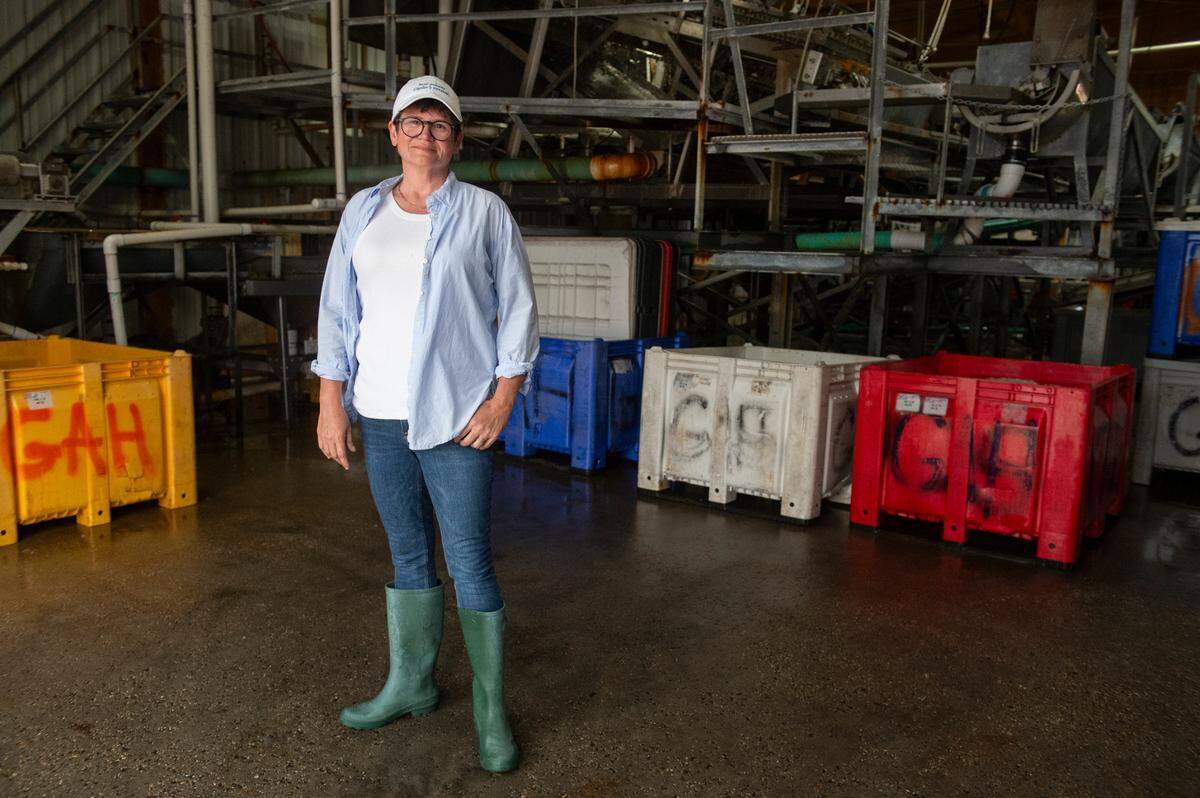
Bethany Fayard, vice president and director of operations at Ocean Springs Seafood Inc., said she’s been looking forward to the law ever since a similar one was put into effect in Louisiana in January 2025.
“I’ve been fighting for this change for a long time because I saw what a big difference it made in Louisiana,” Fayard said. “I would like to see it done nationally.”
Fayard said she expects domestic shrimp sales to increase following the implementation of the law.
“Restaurant owners don’t want to admit that they’re selling imports,” Fayard said. “Our economy needs to support our fisheries and our shrimp factories.”
Sean Desporte, owner of Desporte Seafood, said his company has always clearly labeled their seafood for customers.
“We do the right thing — the way it’s supposed to be done,” Desporte said. “I think it’s great, because I want everybody to do the same thing we do.”
Frank Miller, a manager at Desporte, said complying with the law hasn’t been a challenge so far.
“Most of my time is going to explaining this to my customers because they’re more freaked out than we are,” Miller said.
Confusion and concerns
Not everyone is in support of the law. Thomas Genin, owner of Butcher Block Steakhouse and The Blind Tiger restaurants, questioned the law’s necessity.
“At the end of the day, nobody really cares where it comes from,” Genin said. “This is all a bunch of noise starting and coming from a few commercial lobbyist groups.”
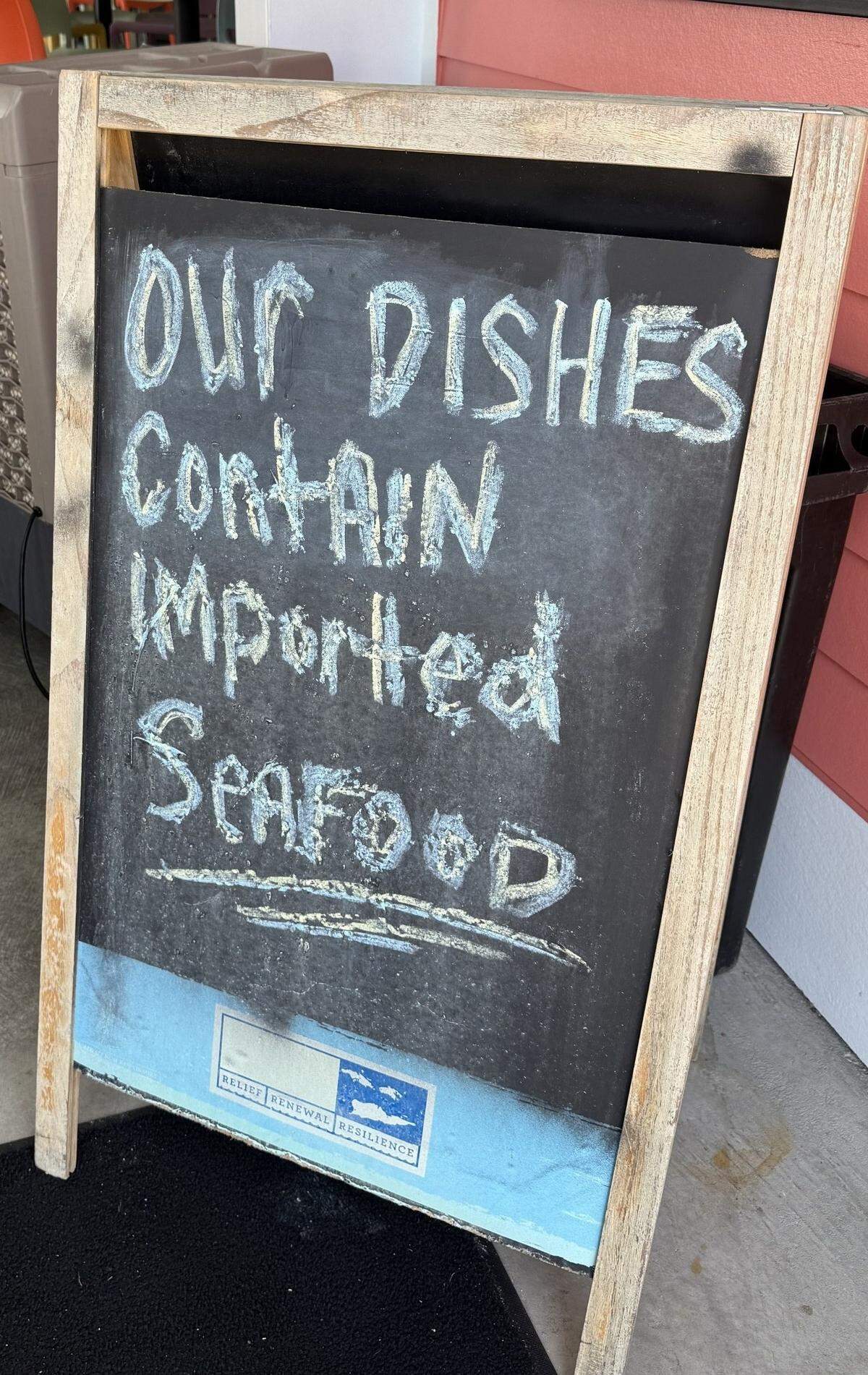
The law expands on a previous country of origin seafood labeling requirement for crawfish and shrimp, but its name initially caused confusion — leading many to believe they would need to list the specific country of origin in addition to labeling products as “domestic” or “imported.”
Under House Bill 602, anyone selling or processing seafood is only required to indicate whether the product is “domestic” or “imported.” The label must be in a font size equal to that of the product name, and any item containing a mix of domestic and imported seafood must be labeled as “imported.”
Genin said he hopes officials will provide restaurants with clarity regarding labeling requirements.
“Nobody has reached out to any restaurant that I know of to tell us exactly what we’re supposed to do,” Genin said.
Rags to Riches owner Shane Bernard echoed concerns about confusion regarding the law, but said he supports the overall concept.
“I’m all for it, because I think that there should be truth in advertising,” Bernard said. “Most people, given the option, would not want to pay the up charge for the domestic shrimp, but we’re still going to try to give them that option.”
Some imports lack in quality
David Gautier, owner of Gautier’s at the Harbor, said he believes more consumers would be willing to pay higher prices if they better understood the quality differences in most imported seafood.
“The consumer has been duped for years with imported products that do not match the quality of what they’re being sold,” Gautier said.
According to Fayard, many imported products are a result of aquaculture — a practice of farming aquatic animals that often involves the use of antibiotics and hormones.
“It’s not a natural process, and the water is disgusting,” Fayard said. “They have to use all these supplements to raise them, and you’re putting that in your body as opposed to a naturally wild-caught product.”
“By no means are all imports bad, but some of them — they’re not fit for landfill,” Gautier said.
This story was originally published July 3, 2025 at 5:00 AM.