Seafood labeling law back on table in MS as many Gulf restaurants serve up imports
When Louisiana passed a law that food-service establishments must label imported shrimp or crawfish, Bethany Fayard’s sales of foreign shrimp to restaurants there plummeted.
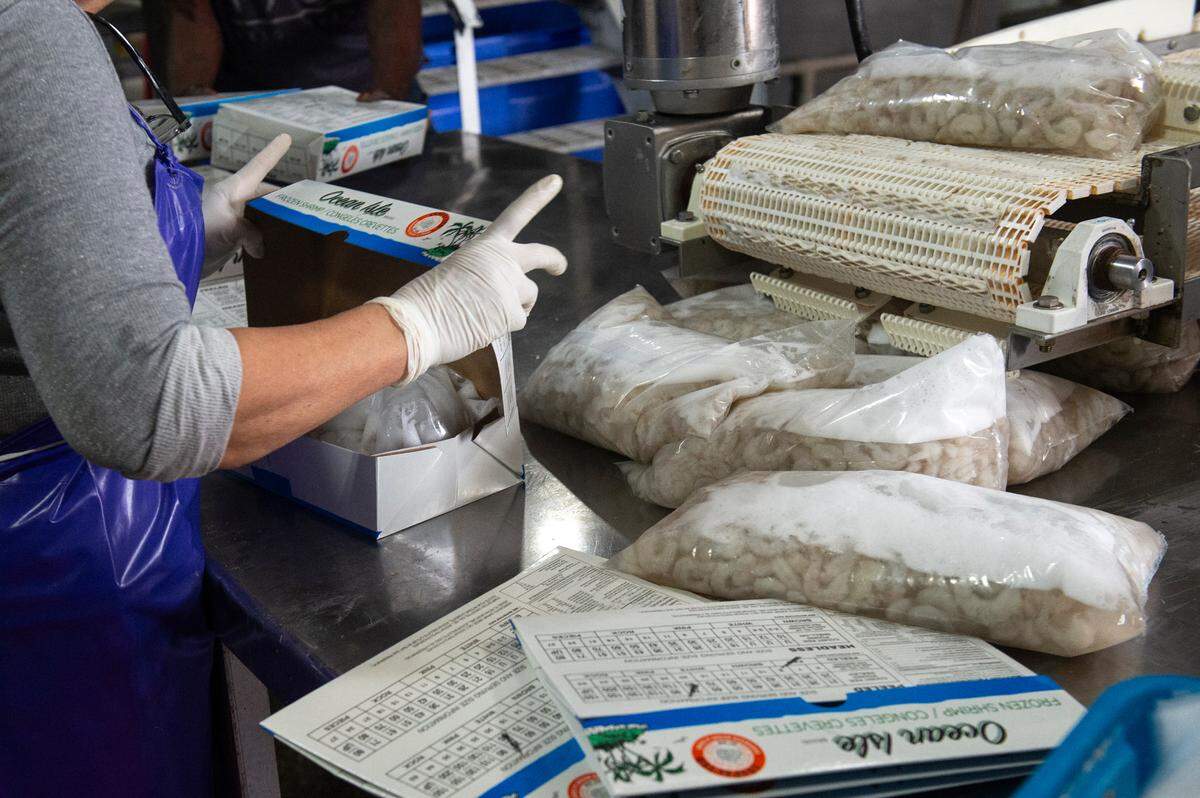
Her Louisiana customers wanted Gulf shrimp instead. Shrimp sales to Louisiana restaurants flipped from 80% imported to 90% domestic at Ocean Springs Seafood, where Fayard is vice president of the family business.
“I have never hidden that we sell imports,” Fayard said. “If we did not sell imports, we would not have the volume to stay in business. We would much prefer to sell American and support our fishermen.”
Alabama recently followed suit with an import labeling law. Fayard and others in the seafood industry hope Mississippi will do the same. While a Mississippi labeling law failed in 2020, legislators expect a bill to be introduced in the upcoming session, which begins Jan. 7.
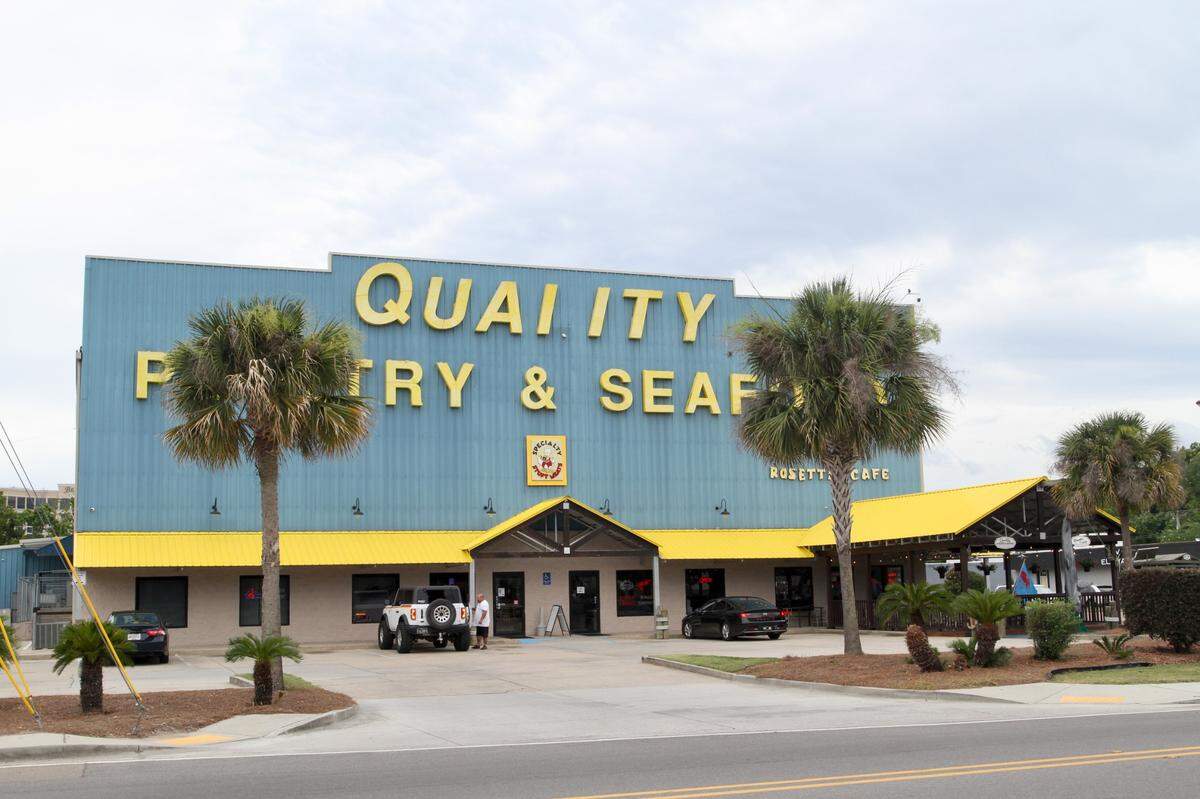
Seafood labeling has been uppermost on the minds of those in the industry and consumers after two well-known Biloxi businesses — Quality Poultry & Seafood and Mary Mahoney’s Old French House restaurant — pleaded guilty in a federal criminal case for conspiring to mislabel seafood.
Diners tend to think they are eating Gulf seafood when they’re in Gulf state restaurants, especially those with fishing-themed decor, such as cast nets and photos of fishermen and boats. But 70-85% of seafood is imported, with more than half of those imports produced through aquaculture, according to the National Oceanic and Atmospheric Administration.
Seafood imports threaten a culture and way of life in Gulf states, proponents of labeling laws say.
“These fishermen, they’re suffering,” said Fayard, whose company processes and sells shrimp to wholesalers and restaurants. “The prices have been very, very low for them, to where they can barely work. We’re not going to have a domestic shrimp industry if something isn’t done.”
Shrimpers cry over low prices
Dean Blanchard, owner of Dean Blanchard Seafood Inc. in Grand Isle, Louisiana, believes seafood labeling laws would be more effective if all Gulf states passed them
“If these five states all passed a law and put some teeth in it,” he said, “I’m telling you, it would save a culture and a way of life.”
Louisiana was the first Gulf state to pass a law, in 2019. But Blanchard said the law didn’t help much. The state’s Health Department reported more than 2,600 violations by June 2023 but was unable to issue fines, the Louisiana Illuminator reported. The law was updated during the 2024 session to include fines and strengthen labeling requirements for restaurants, seafood markets and other suppliers.
While Louisiana law covers only crawfish and shrimp, Alabama’s Legislature this year passed a law that requires food-service establishments to label imported fish and shellfish.
“A lot of people came together to help get this law passed,” said Caine O’Rear, communications director for Mobile Baykeepers, a nonprofit focused on the health of Alabama’s coastal waters.
Research by Baykeepers, he said, helped convince legislators the law was needed.
“We started doing some research and we found out the shrimping business is really at the point of extinction because the price of domestic, wild-caught shrimp have been driven so low by the glut or dumping of imported shrimp,” O’Rear said. He reported in October 2023 that shrimpers were getting $1 a pound for shrimp that sold for $6.50 a pound in 1980.
Blanchard tells a similar story in Louisiana, saying Gulf shrimp prices are lower today than they were when he bought his first shrimp in 1990.
“I’m embarrassed when I’ve got to pay the shrimpers,” said Blanchard, who serves on the board of directors for the American Shrimp Processors Association. “It makes you want to cry sometimes. I’ve seen grown individuals start crying when they received their check. And those are some tough individuals.”
MS considers seafood labeling law
Blanchard hopes Mississippi will become the third Gulf state to require labeling of seafood, leaving Texas and Florida as the only Gulf states without labeling laws.
State Rep. Brent Anderson and state Sen. Mike Thompson say they intend to propose such a law for the 2025 legislative session.
Both chair marine resources committees in their respective chambers.
Anderson stressed that Mississippi’s bill would not single out restaurants, but would also apply to seafood markets, other retailers and wholesalers. Federal labeling laws already require most grocery stores to include the country of origin in seafood labeling, along with suppliers to retail outlets.
“It’s to be responsive to the consumer but also to be fair to the fishermen in the industry, to protect them,” Anderson said. “ . . . If you’re buying a product, any product, you have a right to know what that product is you’re purchasing. It’s pretty simple.”
He said the Mississippi Hospitality & Restaurant Association lobbied against the bill in 2020, when it passed the House and died in the Senate.
The association’s executive director, Patrick Fontaine, essentially says restaurants just need to be honest about what they’re serving. He said that he couldn’t comment on the law that will be proposed for 2025 because he hasn’t seen one yet.
But the association is concerned about the costs members would face for reprinting menus, if menu labeling is required for imports. Also, Fontaine asked, what’s a restaurant to do if Gulf shrimp, for example, are unavailable? Reprint menus?
Why serve Gulf seafood?
In the absence of a state law, Bethany Fayard decided to take on labeling of shrimp. She has Patriotic Prawns stickers available for restaurants that serve Gulf shrimp. The service is free for her customers, whose restaurants her employees regularly stock.
She’s working out how much she would charge non-customer restaurants to participate. A sticker would require regular inspection of the shrimp boxes in their freezers, which are labeled, and checking three months of orders to see where shrimp come from.
In the past week, Fayard has delivered Patriotic Prawn stickers to three customers: Martha’s Tea Room and Cheryl’s Steakhouse, restaurants in Ocean Springs, and wholesaler Pinchers Seafood in Bay St. Louis.
Fayard said there’s a misperception that Asian restaurants sell Asian shrimp. But Vietnamese residents who own Asian restaurants are loyal to the U.S. seafood industry because so many migrated to Gulf states to go into the fishing business, she said.
“Most of the places that are selling American shrimp are the little mom and pop places,” Fayard said. “The only reason I’m giving out stickers today is because 93% of the shrimp in restaurants are not American. And that holds true on the Coast.”
Cheryl Parker, owner of Cheryl’s Steakhouse, offers a popular grilled shrimp dish that diners often order as an appetizer. Shrimp, she said, happen to be her favorite meal. She eats it six days out of seven, she said.
“I would rather pay more for a better product and serve a better product,” Parker said. “You’re supporting a whole industry. You’re right here on the Gulf Coast. There’s no reason not to serve fresh Gulf seafood.”