
Will you find the bean this Epiphany? Brush up on Coast Mardi Gras lingo with this dictionary
Mardi Gras traditions haven’t changed much in the last three decades on the Coast. But do you know all of the Mardi Gras lingo and what it means or why we say it?
We’ve got you covered.
In 1998, the Sun Herald published its very own Mardi Gras dictionary for revelers in the Biloxi area. We’ve added a few additions for the 2023 season.
MS Coast Mardi Gras dictionary
- Beads: A colorful Mardi Gras necklace. Beads are among the most favored parade throws (see Throw), especially if they are the long, fancy ones. Pretty glass and ceramic beads were first used in the 1920s, but by the 1960s pop-apart plastic ones surfaced. Today most of the necklaces are made of plastic.
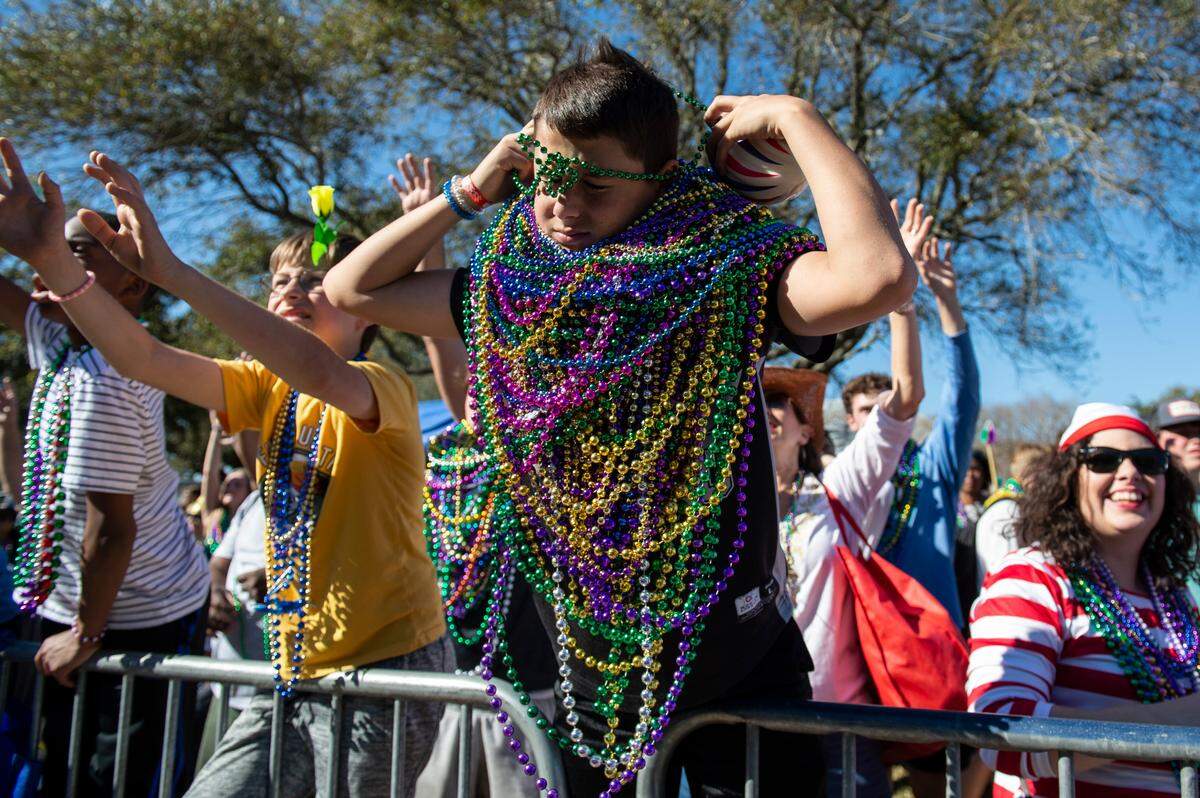
- Boeuf Gras: (pronounced Burf Graw) A big, fat white bull, sometimes today made of papier mache or plastic instead of being alive. This “Fatted Bull,” dressed in flowers and attended by butchers and cooks, was the symbol of Mardi Gras in the Middle Ages. It appeared on the streets of New Orleans long before organized parades.
- Carnival: The festival season that stretches between Epiphany (see Epiphany) and Mardi Gras Day. Rooted in ancient traditions that were Christianized, Carnival was brought to the South by French and Spanish settlers whose descendants turned it into true American excess.
- Court: The king, queen, maids and dukes of a Carnival krewe or organization. They generally have a den, a place where they meet and sometimes make their own floats. The method of selecting this royalty varies, with some drawn randomly, others by careful social selection.
- Cowbellion de Rakin Society: Formed on New Year’s in Mobile in 1831 by some rather happy men who grabbed cow bells and rakes and began to parade. Three Cowbellions who moved to New Orleans adapted the idea to form Comus, the first Mardi Gras krewe (See krewe).
- Doubloon: Large, round aluminum coins used as throws. They are the creation of engraver H. Alvin Sharpe, who introduced them in 1960 to the Krewe of Rex (see Rex). On one side of the coin is a krewe name and insignia; on the other is the theme of that year’s parade.
- Epiphany: (pronounced Ee-piff-a-knee) The night on which the Three Wise Men found the baby Jesus. Epiphany, or Twelfth Night, falls on Jan. 6, and it signifies the end of the Christmas season and the beginning of Carnival.
- Finding the bean: Getting the good-luck baby in a piece of cake. (See King Cake Baby)
- Gulf Coast Carnival Association: The Coast’s oldest carnival organization. Today, GCCA is considered the patriarch of Coast carnival krewes, and it lays claim to staging parades in Biloxi since 1908.
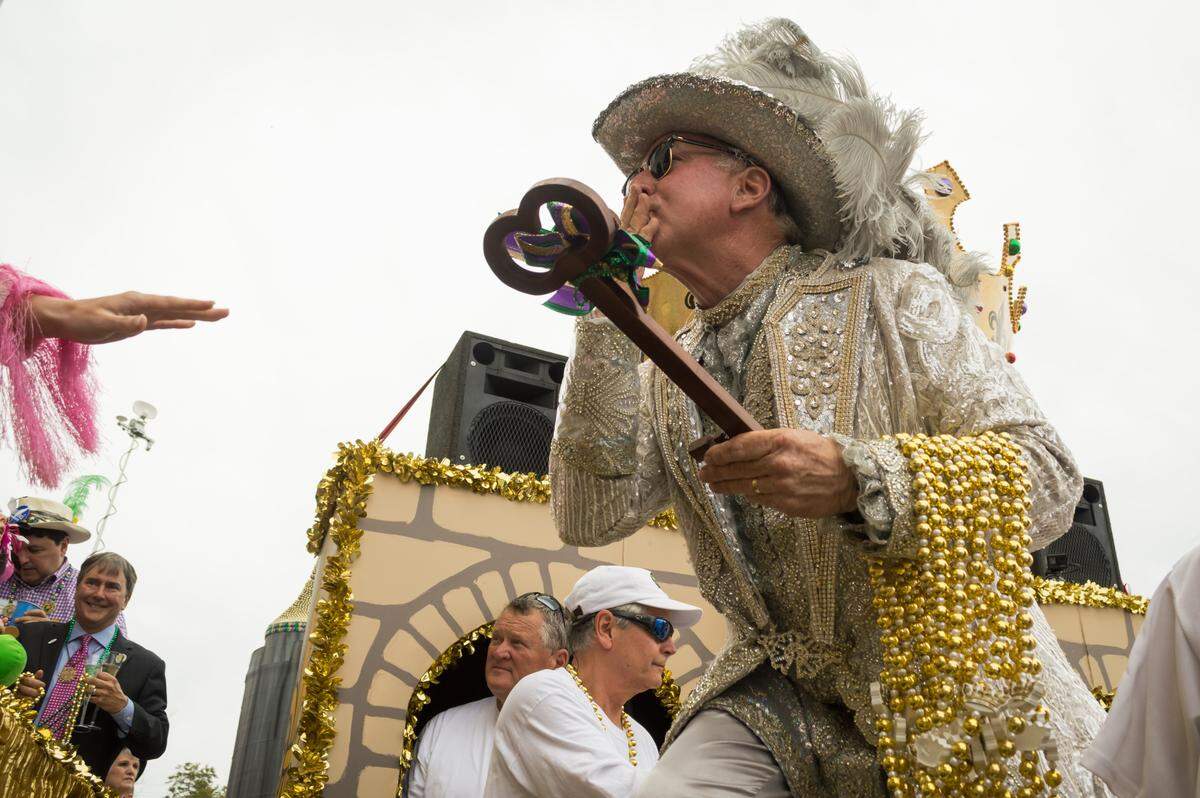
- King d’Iberville: The monarch of the Mississippi Gulf Coast Carnival Association, named after the founding French father of the Biloxi Colony. King d’Iberville is to the Coast what King Rex is to New Orleans (see Rex and Queen Ixolib).
- King Cake: A sweet pastry, oval shaped like a crown and served throughout Carnival. The cake has evolved from a Twelfth Night cake that was served only on Jan. 6 by the French, Spanish and other Europeans. But American excess set in, and the colorful pastry now is served throughout Carnival.
- King Cake Baby: A tiny, pink plastic babe hidden inside a king cake. The lucky person who gets the cake slice with the baby becomes king or queen for the day, plus tradition says they will have one year of good luck. The payback is that “the bean finder” must get the next king cake. In Europe and early New Orleans, the cake trinket was a real bean. History is murky as to why that changed.
- King Rex: The supreme symbol of New Orleans’ Carnival since his appearance in 1872. The Krewe of Rex is credited with the concept of daytime parades and many other Carnival firsts.
- Krewe: (pronounced crew) Generic term for a Mardi Gras organization. The unusual word was coined by Comus (see Mystick Krewe of Comus) to emulate Old English. Krewe names are usually drawn from Roman, Greek, Norse or Egyptian mythology. Some krewes merely stage Mardi Gras parties or balls and possibly join in another krewe’s parade; the larger krewes organize their own parades.
- Lent: For Christians, the 40 days of self-examination and repentance in preparation for the Easter festival. The coming of Lent is the excuse for the kick-up-your heels, last flings of Mardi Gras.
- Mardi Gras: (pronounced Mar-dee Graw) A Christian holiday rooted in ancient spring and fertility festivities. It is French for “Fat Tuesday,” a symbolic name for the over-indulgence before Lent. Mardi Gras can occur on any Tuesday from Feb. 3 through March 9. The fluctuating date was established by the Catholic Church, which designed the Gregorian calendar with a fixed date for Christmas but moveable dates for other religious holidays.
- Mardi Gras colors: Purple, green and gold. The three colors first appeared in 1872 on a Krewe of Rex carnival flag specially designed for the visit of the Grand Duke of Russia. The colors quickly became universal, and Rex assigned them with purpose: Purple represents justice, green stands for faith, and gold signifies power.
- Mardi Gras Mambo: The R&B classic often heard on parade routes. The Hawkettes, with popular lead singer Art Neville, recorded this popular tune in 1954. Among other tunes is Al Johnson’s 1960 “Carnival Time,” in which he says “everybody’s drinkin’ wine because it’s Carnival time.” Such tunes even make sourpusses move their feet.
- Masking: The wearing of masks for both those in the parade and for those watching. Masquerading at spring festivals is another pre-Christian hold-over. Today, the secrecy of masks remains important in some krewes that do not reveal royalty names. On the spectator scene, the long-held tradition of masking is waning.
- Moon Pie: A fat cookie used as a parade throw. This soft sweet with a marshmallow center and covered in chocolate was a shoe-in as a Mobile throw when the popular Cracker Jack was deemed unsafe because of the box’s sharp corners. Moon Pies began 70 years ago as an inexpensive treat for the working man. From Mobile, the popular throw has made its way to the Coast.
- Mystick Krewe of Comus: The first Carnival organization in New Orleans. Comus, formed in 1857 and named for the Greek god of joy and mirth, is credited with saving the city’s failing Mardi Gras, described as a “miserable annual exhibition. . . originated in a barbarous age.” The idea of an organized krewe to stage balls and parades was quickly accepted.
- Parade: A procession of floats, decorated flat-bed trucks, bands and walking clubs. There is no general theme for Mardi Gras, but individual parades depict a specific subject. Floats and maskers on them reflect the krewe’s theme, which is often history, legends, children’s stories, entertainment, famous people or entertainment.
- Queen Ixolib: (pronounced Icks-o-lib) Queen of the Gulf Coast Carnival Association. Ixolib is Biloxi spelled backward.
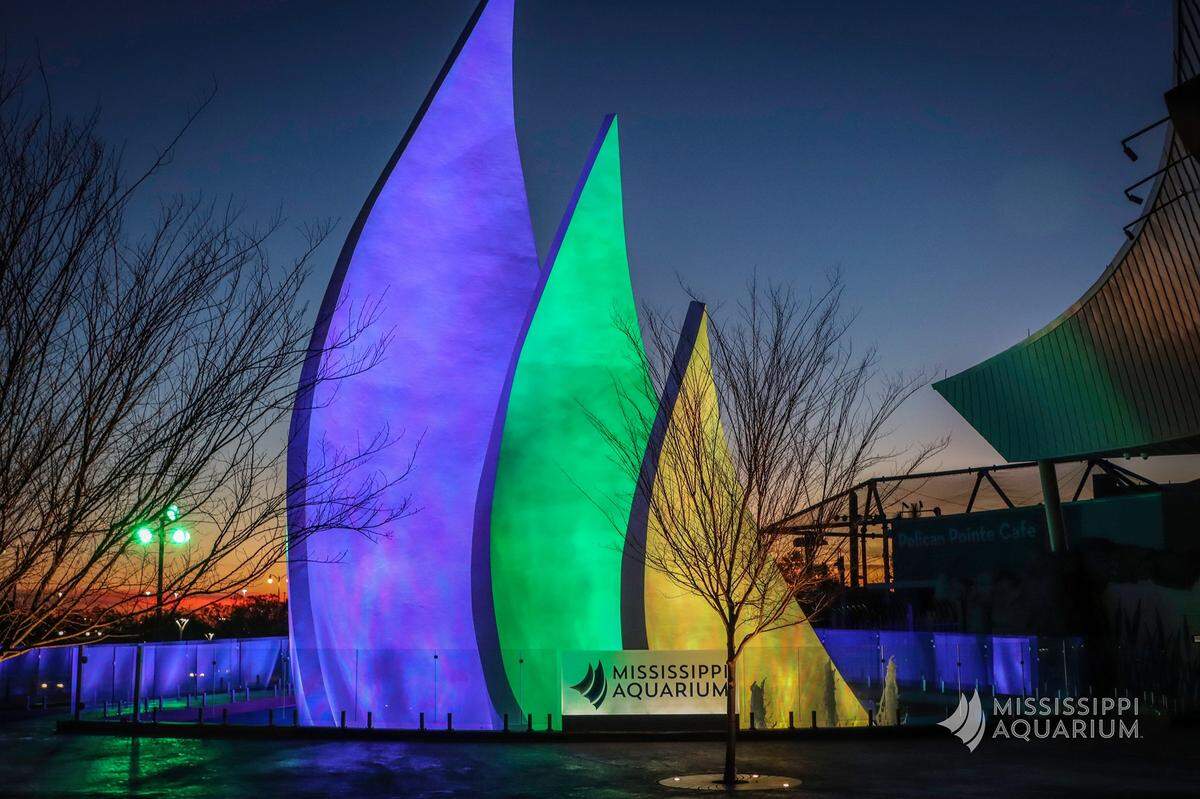
- Sail Lighting: Annual ceremony at the ticketing plaza of the Mississippi Aquarium where the Gulf Coast Carnival Association assists in lighting the aquarium’s sail installation with Mardi Gras colors of purple, gold and green. This year’s ceremony will be Friday, Jan. 6 at 5:30 p.m.
- Tableau: (pronounced tab-low) The story, music, costumes and pageantry of a Carnival ball. Each year, a krewe chooses a new theme for its ball, and around this theme is woven the entertainment that is usually staged by krewe members. Themes can be from the sublime to the ridiculous.
- Throw me something, Mister: The age-old cry of parade spectators. The phrase, for which a loud voice is essential, is used to catch the eye or attention of someone on a float, who will then throw you a trinket (see throws).
- Throws: Trinkets tossed from floats by costumed men, women and children. Sugared almonds and other sweets were the earliest throws; Necklaces, panties, plastic cups, candy and doubloons are common today. Such trinkets are credited to 1871 when the Twelfth Night Revelers krewe in New Orleans featured a float with Santa Claus dispensing gifts. Rex in 1921 cemented the idea by throwing beads.
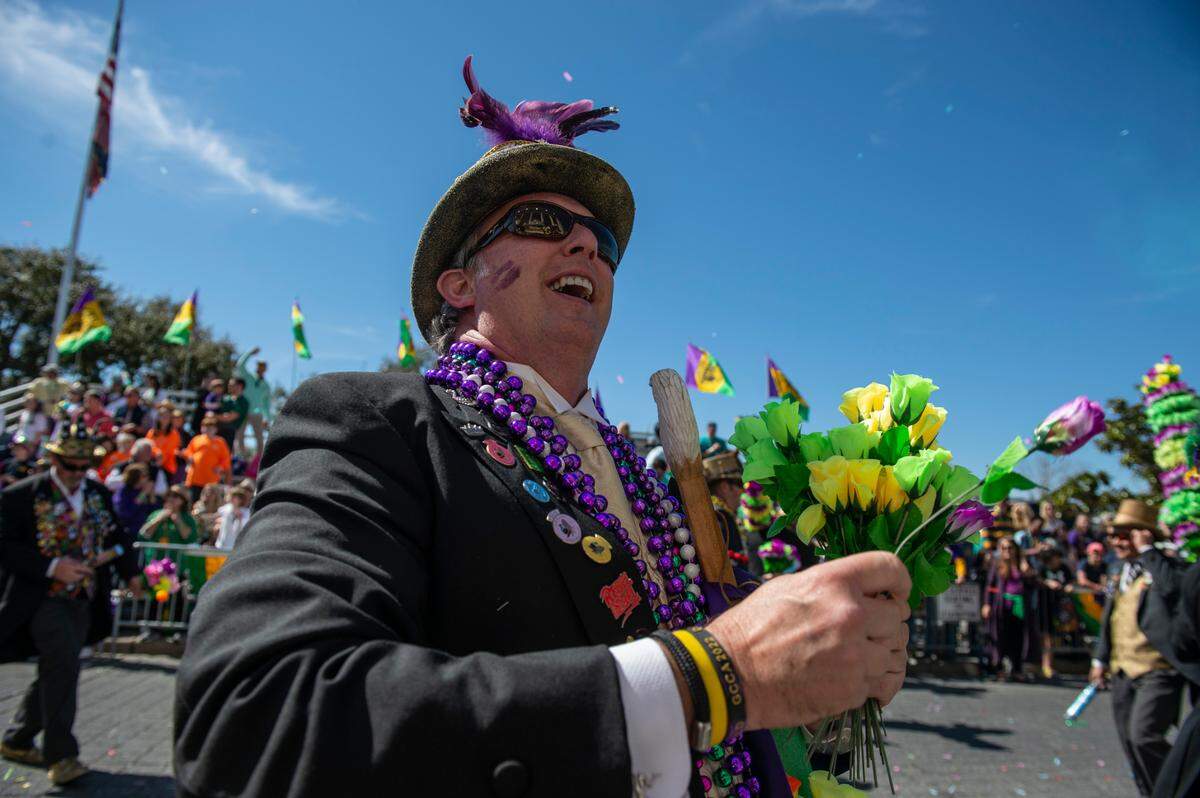
- Walking Club: A group of walkers with a common theme and costume. Marching clubs add spontaneity and merriment, sometimes in their own mini-parades, other times by joining organized parades. One of the best known on the Coast is the Ole Biloxi Marching Club, a group of men who hand out paper flowers for kisses.

This story was originally published January 5, 2023 at 7:00 AM.

Mona Moore
Sun Herald